

Loading Lesson
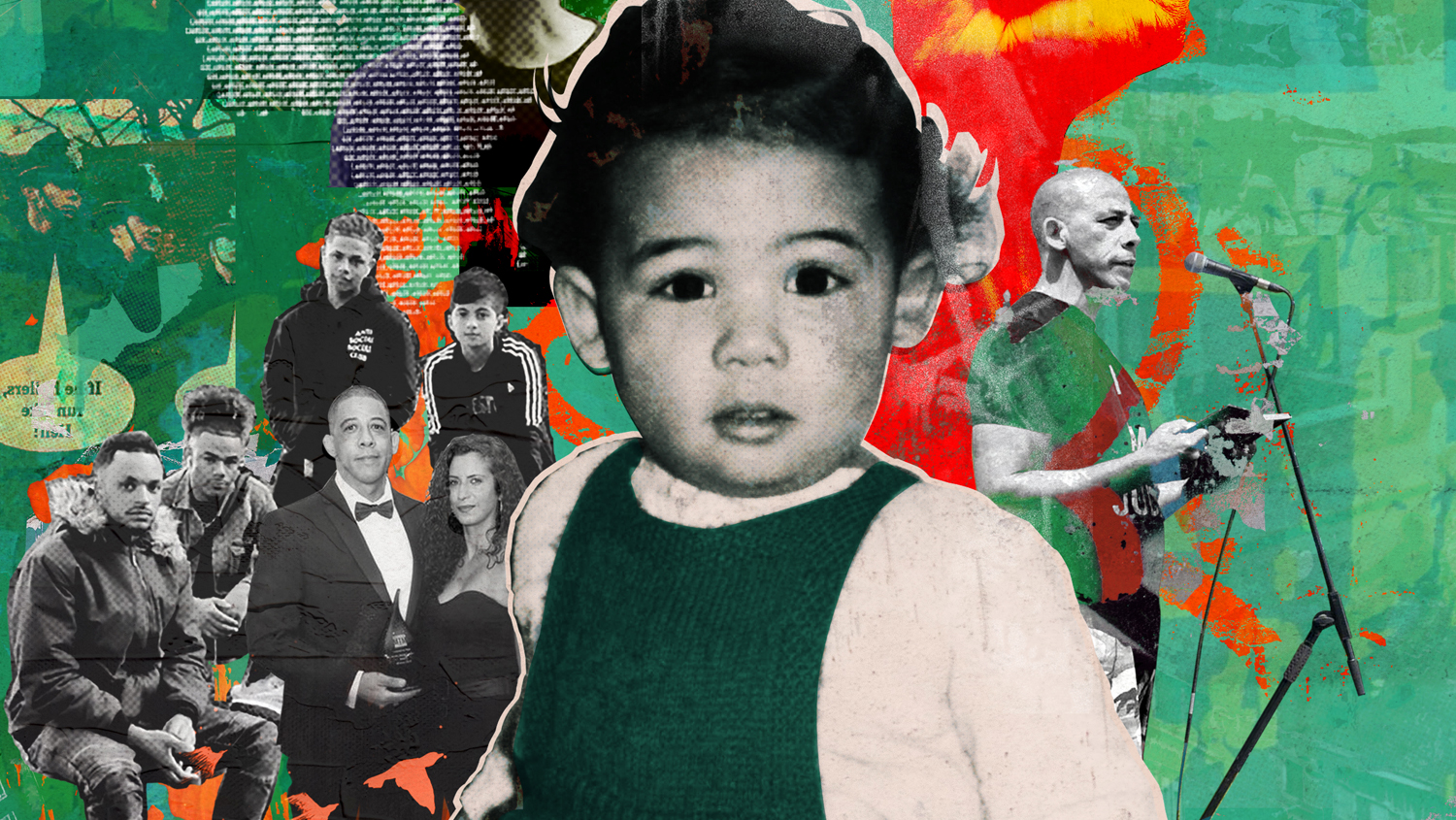

The UK: A Brief Introduction
Today, the city of Bristol has a population of 467,000 and it is the most populous city in South West England. However, Bristol began life as a small settlement known as Brycgstow, established by the year 1000 AD where the rivers Frome and Avon join. The town became a county in 1373, the first town in England to be given this status. During this period, Bristol became a shipbuilding and manufacturing centre.
Since the 15th century Bristol has developed into a major UK city. The main reason for this is the international trade that took place from its port that brought a great deal of wealth to the city and to the merchants who controlled the Transatlantic Slave trade. These merchants included William de la Founte in the 15th century, Robert Kitchen in the 16th century and George White in the 17th century. These merchants transported enslaved people from West Africa to colonies in the Caribbean and America to provide free labour. This free labour enabled other trades and industries to flourish, including tobacco, sugar, cotton and banking.

Today, the city of Bristol has a population of 467,000 and it is the most populous city in South West England. However, Bristol began life as a small settlement known as Brycgstow, established by the year 1000 AD where the rivers Frome and Avon join. The town became a county in 1373, the first town in England to be given this status. During this period, Bristol became a shipbuilding and manufacturing centre.
Since the 15th century Bristol has developed into a major UK city. The main reason for this is the international trade that took place from its port that brought a great deal of wealth to the city and to the merchants who controlled the Transatlantic Slave trade. These merchants included William de la Founte in the 15th century, Robert Kitchen in the 16th century and George White in the 17th century. These merchants transported enslaved people from West Africa to colonies in the Caribbean and America to provide free labour. This free labour enabled other trades and industries to flourish, including tobacco, sugar, cotton and banking.
The UK: A Brief Introduction
As an industrial city, Bristol is home to communities from many different backgrounds, including Bristolians of South Asian, East African, and Caribbean heritage. In the years following the Second World War, the British Government encouraged citizens from the British colonies abroad including the Caribbean to come and settle in the UK and contribute to the rebuilding of the economy.
Despite this encouragement, when these communities arrived in the country they were met with a lot of discrimination that refused them access to homes, jobs and positions of influence in the city. Before the Race Relations Act of 1968 immigrant communities had no legal protections against this discrimination. Even now, inequality still exists in the city of Bristol and across the country.
Bristol consistently ranks in the top 10 worst cities in the UK to grow up disadvantaged and African heritage in terms of schooling outcomes and employment opportunities. In 2017, an organisation that investigates racial inequality, The Runnymede Trust found that Bristol was ranked 159th out of 348 districts, for educational inequality. However, for people of African descent Bristol has the 3rd highest level of educational inequality in England and Wales. In 2020 the Bristol Post reported that one in six children are living in poverty in Bristol.
Education in England
Until the 19th century, education in the UK was mostly overseen by the Church. In the 19th century there were *reforms that introduced state-funded schools and made education for children compulsory. At first there were no rules for what should be taught and each school decided this for themselves.
It wasn’t until 1991 that the National Curriculum was introduced in England. The National Curriculum makes decisions about what is taught, and what is not taught in schools. This means it dictates which stories and what knowledge is shared with learners.Historically the National Curriculum has mostly shared knowledge about the perspectives and contributions of men of European heritage. It has not shared knowledge about the perspectives and contributions of others in British society, including those of African or Asian heritage and of other non-European heritage. This means that prejudice against and ignorance of minority groups has not been challenged. It also means that learners who are not of European heritage can not find representation or role models. Not feeling represented in the curriculum can be disempowering and discouraging. This can negatively affect young people’s wellbeing, stopping them from achieving their full potential at school.
The learners’ results - particularly at GCSE level - became more of a priority than the cultural relevance of what was taught. Education in England has a history of highly favouring a *eurocentric narrative. Which has led to differences in experience and achievement for students who are not represented.
*Reforms = changes.
*Eurocentric narrative = focusing on European culture or history, excluding the rest of the world; often regarding European culture as more important that others.
I Wish
Listen to the following poem, writern by Lawrence Hoo
PLAY
Listen to the following poem, writern by Lawrence Hoo
PLAY
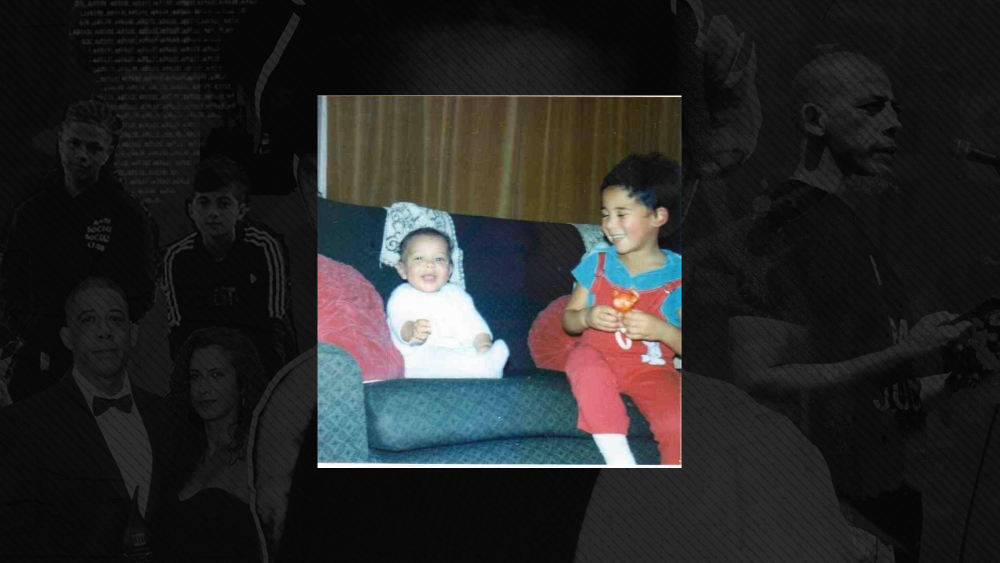
Lawrence Hoo (Right) and his brother Tyrone Hoo.
Lawrence Hoo’s childhood education
Lawrence Hoo was born in Birmingham in 1969, the son of an African-Chinese Jamaican father and mother of European-British heritage.
In 1972 Lawrence Hoo’s mother left his father and moved to Bristol, with him and his brother. After arriving in Bristol she was told by social services that she would be better off making a fresh start and having her children put up for adoption, because of this at age 3 Lawrence lived with his grandparents in Uphill, just outside of Weston Super Mare, and his 6 month old brother Tyrone was adopted. Lawrence’s grandma was his first primary school teacher and held him to high standards.
At the age of 5-and-a-half, Lawrence Hoo returned to live with his mother who had now settled in Bristol. Lawrence Hoo’s mother married and had two more children. His young home life was unsettled so Lawrence would often run away and fail to return which resulted in him spending a lot of time on the streets where he would find numerous ways to entertain himself, which often led to him getting in trouble. Lawrence witnessed violence from a young age and was subjected to racist abuse.
“I always found the streets more comfortable than home. Even when I was five or six when things got tough I’d go to the streets. I was a runaway.” - Lawrence Hoo
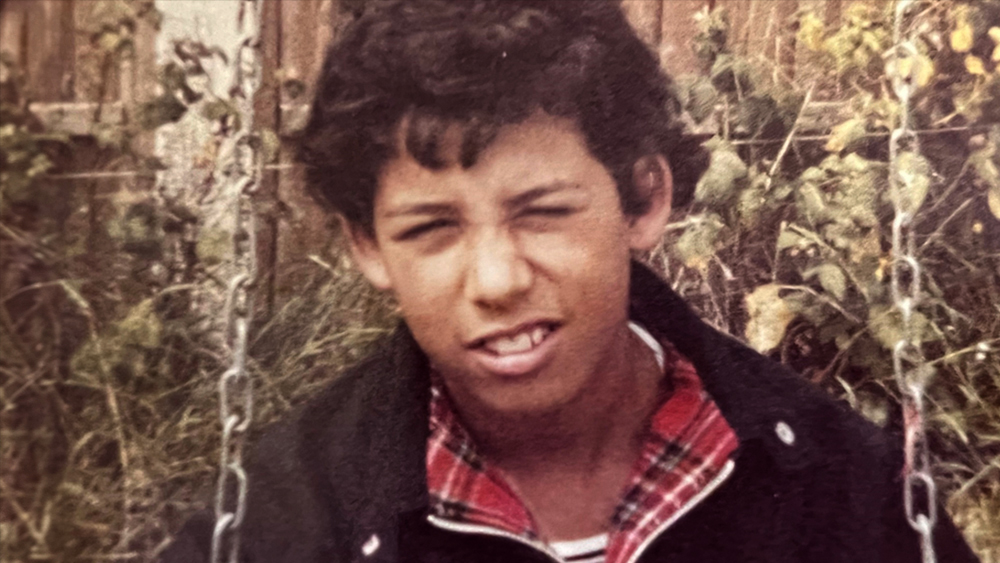
Lawrence Hoo aged around 11 years old.
Lawrence Hoo’s childhood education
Lawrence Hoo remembers enjoying attending Bannerman Road Primary School and showed exceptional ability at school in his younger years.
He aced his 11+ and was offered a scholarship at a private boarding school. But the offer was mysteriously revoked, leaving him disillusioned.
After this Lawrence’s behaviour deteriorated due to him feeling that even when he behaved well and achieved he was still treated as if he was bad and had no worth. Lawrence said: “I had a bit of mischief in my bones, it accelerated that.” Later, Lawrence ended up in a children's residential home in a community where racism was rife and fights commonplace.
Lawrence Hoo’s childhood education
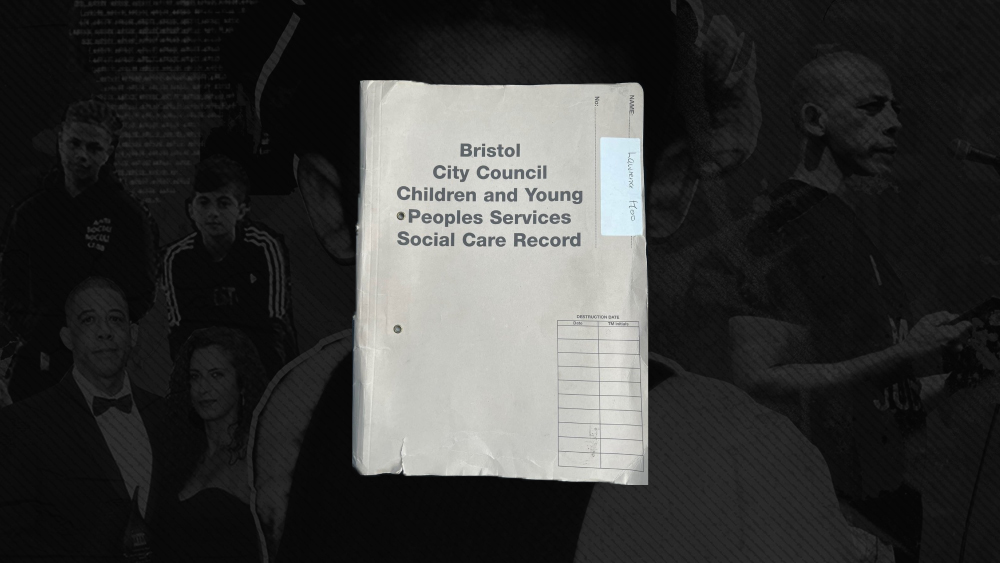
One week before his 12th birthday Lawrence Hoo was sent to a secure children’s centre where he was educated on site, because he was deemed to be out of control, he was promised he would return home within three weeks. Instead, three months later he was placed in a Children’s home for the next 2 years where he attended another mainstream state school.
Due to being in care and racial stereotypes, at secondary school Lawrence was often seen as a problem child, which he himself would then live up to. He attended eight schools in total across Bristol and the South West. He left school at the age of sixteen, with no qualifications.
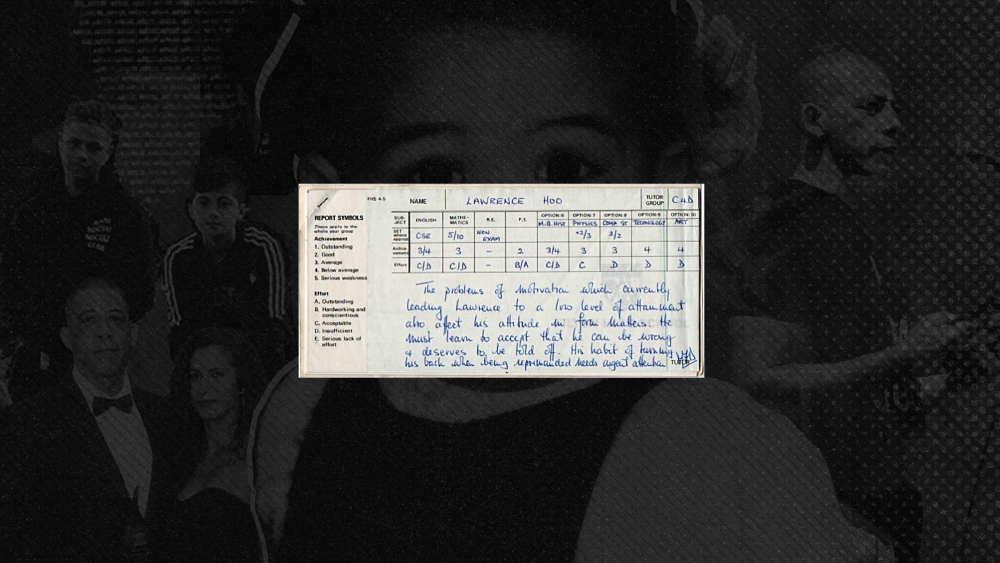
A Filton High School report for Lawrence Hoo:
“The problems of motivation which [are] currently leading Lawrence to a low level of attainment also affect his attitude in form matters. He must learn to accept that he can be wrong and deserves to be told off. His habit of turning his back when being reprimanded needs urgent attention.”
“The problems of motivation which [are] currently leading Lawrence to a low level of attainment also affect his attitude in form matters. He must learn to accept that he can be wrong and deserves to be told off. His habit of turning his back when being reprimanded needs urgent attention.”
Lawrence Hoo
"Even when I was good I was treated as if I was bad, so I chose to be the best bad I could be, because it seemed like the only thing I could achieve."
"Even when I was good I was treated as if I was bad, so I chose to be the best bad I could be, because it seemed like the only thing I could achieve."
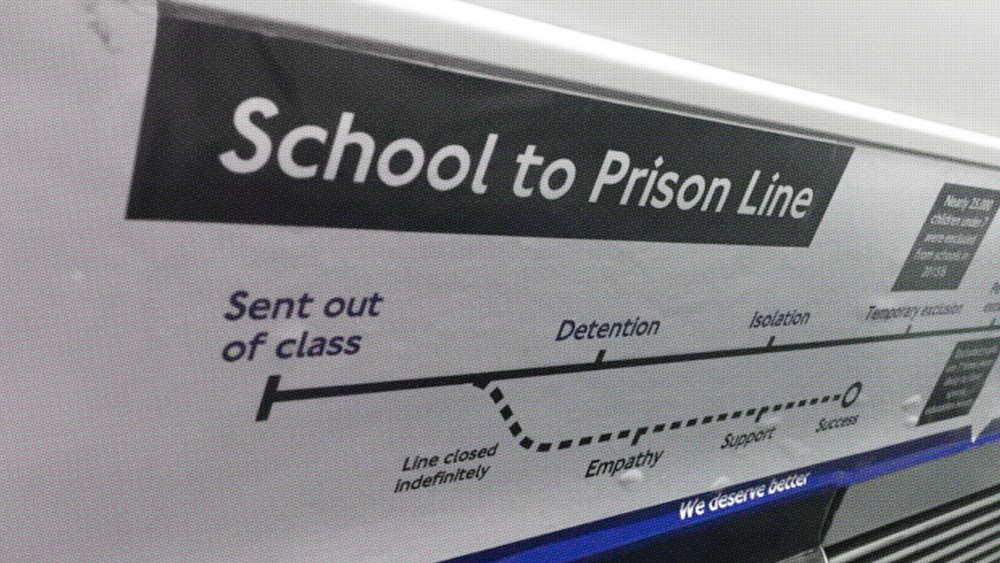
The School to Prison Pipeline
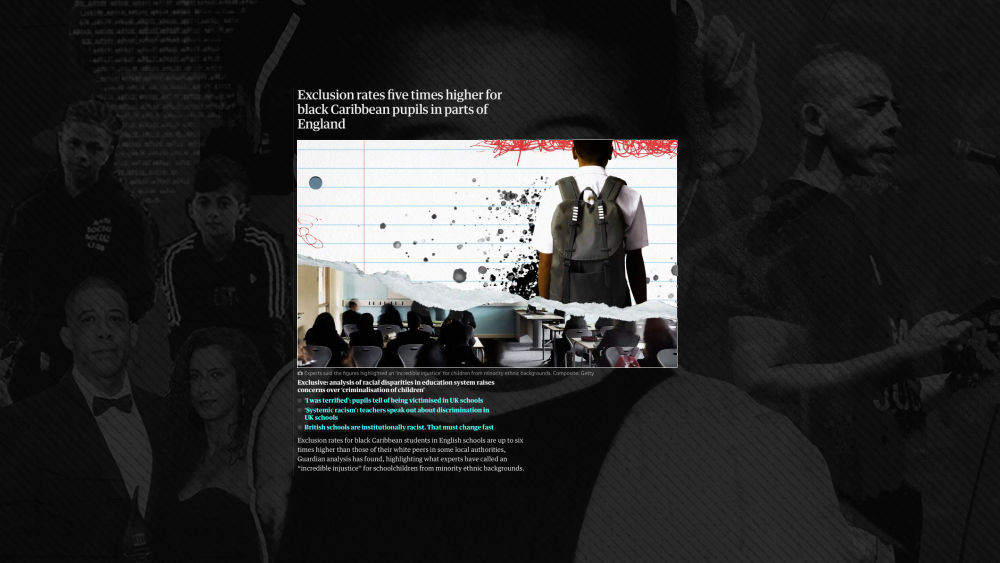
The School to Prison Pipeline is a name given to the fact that individuals excluded from school are five times more likely to end up in prison.
Statistics show that individuals of African Caribbean heritage are five times more likely to be excluded from school. They are also nine times more likely to be stopped and searched by the police.
Lawrence Hoo was excluded from school, and he connects his disconnected behaviour with the fact that his education offered him no positive representation.
Lawrence Hoo’s classmates of European origin will also have received an education that gave low status to individuals of African or African Caribbean heritage.
School of thought
In 2018 only 1% of British children's books feature a main character who is black or minority ethnic, an investigation into representations of people of colour has found.
In 2019, just 11% of GCSE students studied modules that referred to the presence of black people in British history.
In 2020 the biggest exam board in England did not include a single book by a black author in their English literature specifications. 75% of English teachers have concerns about a current lack of ethnic diversity. This is because in 2014 the former secretary for education, Michael Gove, made the teaching of black history optional.
“When you’re figuring out the world, being able to see yourself in books, as well as people who don’t look like you, is really important. It means you see your story as valid, and it can contribute to who you imagine yourself to be – and a kid should be able to imagine themselves as anyone in the world. These mirrors are so important.”
- Nakesh Shukla, British author and screenwriter
What’s changed?
Investigating racism in UK schools, the 1977 rampton report reads: ‘Many West Indians insisted to us that the major reason for the underachievement of their children at school was racism (racial prejudice and discrimination), and its effects both in schools and in society generally. Many other people who gave evidence to us mentioned racism as a contributory factor.’
A 2020 Guardian report found that when asked about racism in education, more than nine out of 10 (95%) black students in the UK said they had witnessed racist language at school and almost half (49%) said they believed racism was the biggest barrier to academic attainment.
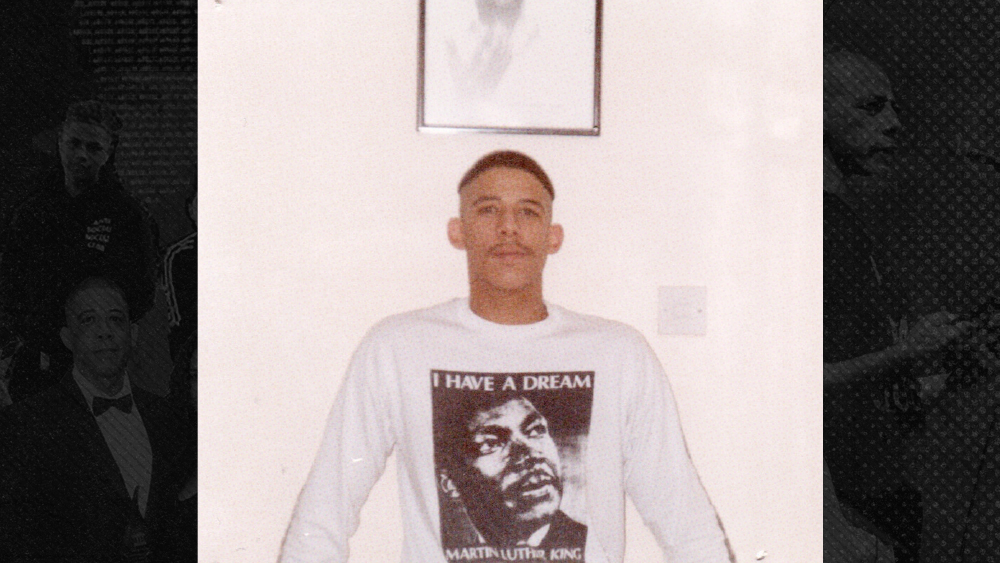
Lawrence in 1990
Lawrence Hoo’s work experience
Due to leaving school without any qualifications, in 1985 it was hard for Lawrence to find any meaningful employment. Which resulted in him doing several government funded employment schemes, and leading him to some further *menial jobs.
In 1991, at age 23, whilst working at Royal Mail sorting office Lawrence was diagnosed with Hodgkin's Non Lymphoma, a type of Cancer, in his neck. He was then admitted into hospital for surgery, followed by a course of radiotherapy which caused him to spend a lot of time away from work, costing him his job. ‘I lost dozens of kilos and my neck went black from the radiotherapy. I decided life didn’t want to be kind to me. My life turned dark after that, so I decided to make my living in the environment I felt most comfortable and accepted, the streets I grew up on.’
During this time Lawrence became a *law unto himself, which allowed him opportunities he had not experienced before. As much as this lifestyle was exciting, it had pitfalls which for many cost them their health, freedom and ultimately their lives.
*menial = not requiring much skill and lacking prestige. *law unto themself = acts in a way that shows he does not care what kind of behaviour other people think is acceptable.
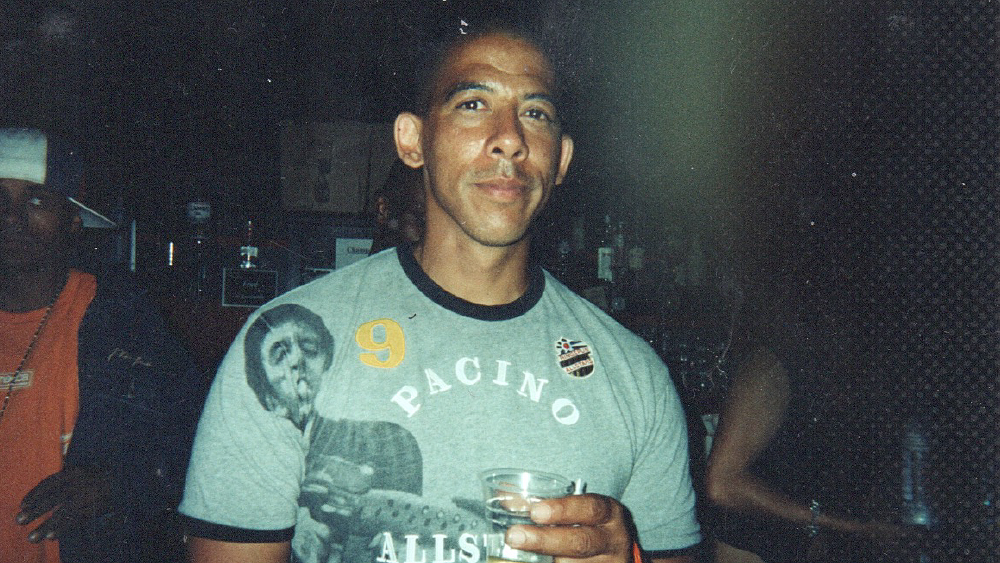
Lawrence in 1999
Lawrence Hoo’s work experience
After years of living outside the system and the imminent birth of his son, Lawrence began reflecting on his life and the choices he had made, he wanted to do better for his children by being the positive role-model he never had.
In 1999, he did an IT course at KTS training which led to him being taken on as a IT training adviser at YMCA Training. Over the following years Lawrence progressed to becoming an NVQ assessor and internal verifier for the Exam Board of OCR. Through this work it became blatantly obvious that many young people from Lawrence’s community, or with a similar background to him were still being failed by the education system through no fault of their own. So many of the people who were working with these children had such low expectations of who they were and what they could achieve. Lawrence could also see that a lot of the external influences that had impacted his development were still very much present in and around his community.
Travelling nationally and internationally working for DJs such as Roni Size and Goldie, Lawrence began reflecting on his own community which caused him to investigate who was responsible for the *lawlessness of inner city Bristol, leading to his first poem ‘Life’ in 2003 and the publication of his first book of poetry and documentary ‘Inner City Tales’ in 2006.
*lawlessness = a state of disorder due to a disregard of the law; not restrained or controlled by law.
Lost innocence
In 2004 Lawrence began using poetry, film and photography to shine a light on some of the serious issues children were facing in his community specifically drugs and *prostitution. Lawrence’s work focused on places where young children and families should be safe: nurseries, primary schools, health and community centres.
Watch this news report on Lawrence Hoo’s work to protect the children from his community.
Watch Youtube video
*prostitution = the business or practice of engaging in sexual activity in exchange for payment.
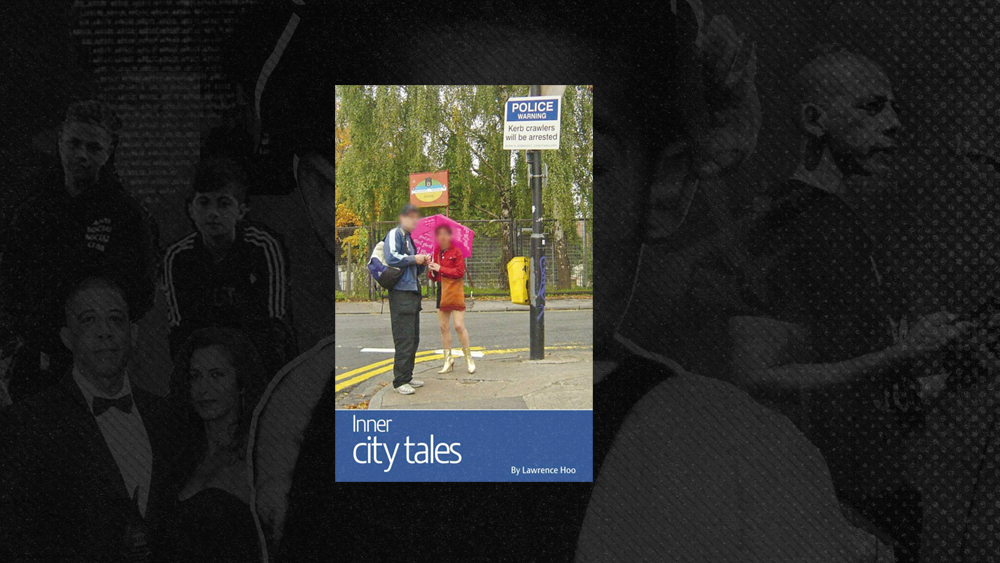
Inner City Tales, a poetry collection published by Lawrence Hoo in 2006.
I wish
In August 2006, Lawrence was asked if he could have one personal wish, what would it be? He said, "if I could have one wish for me, it would be for something I wish I had when I was a boy". "And what is that?", "I wish when I was boy, I was taught more about African history and positive role models of African Ancestry". Lawrence felt that if he was, it would have had a profound effect on his development and expectations growing up.
He went home and thought of how there are so few books available about African history and positive role models of African ancestry available in general bookstores and libraries. While thinking about how the negative information Lawrence was taught about Africa was in total contrast to the information that he had been able to research and find out about Africa. He then decided to write a poem about my experiences based on the wish question and that evening, ‘I Wish’ was written.
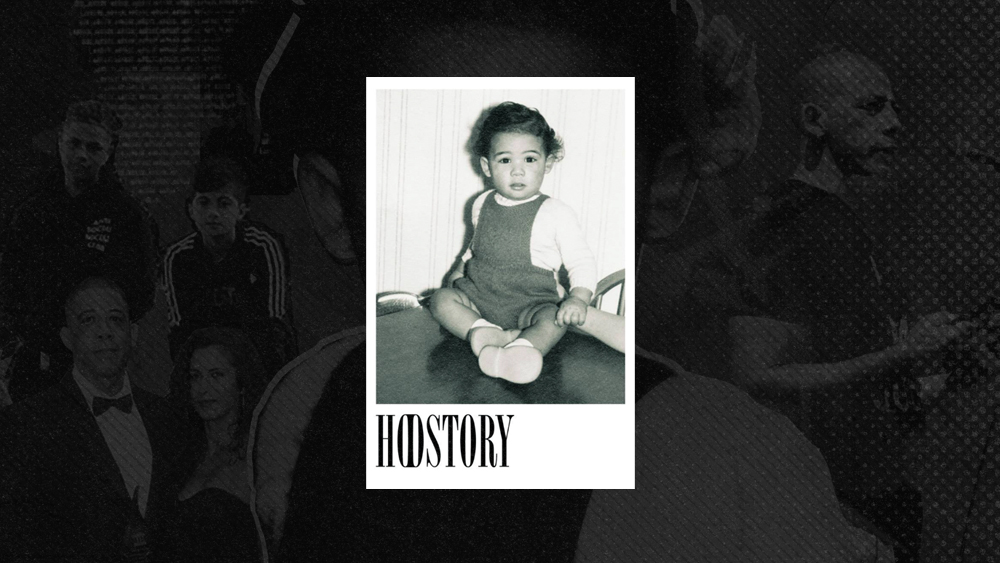
Original flyer for the HOOSTORY exhibition at Centrespace Gallery in 2007.
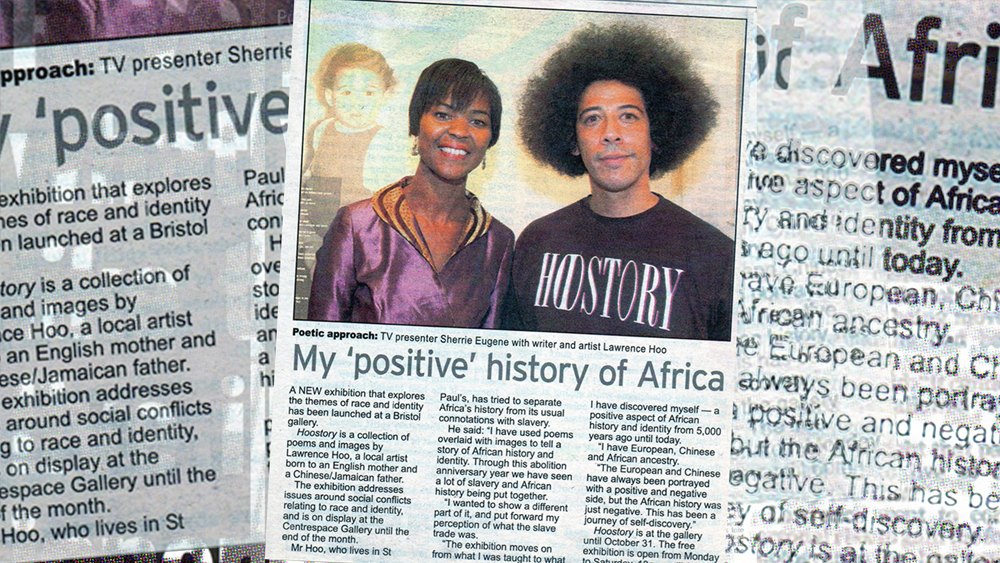
HOOSTORY
The year 2007 was being promoted as a celebration year for the bicentenary of the abolition of the transatlantic slave trade, now called the exploitation and trade of enslaved African people. Much of the information being presented was the same information Lawrence was taught and it made him angry, as he knew there was another story to be told but it was generally being ignored.
Lawrence then looked back at the ‘I Wish’ poem he had written and even though it summed up his emotions and feelings, he felt it wasn't enough to explain the journey he had taken in one poem. That is when it struck him to use the ‘I Wish’ poem as the foundation block for a collection of poems to tell a different story, his story, and Hoostory was conceived.
Shipshape and Bristol Fashion
In 2009, to coincide with the opening of the new wing of the Colston Hall (Bristol Beacon) Lawrence and his friend and future business partner Chaz Golding create Shipshape and Bristol Fashion, a Guerilla art project.
The project was to highlight that ever since 1707 when Edward Colston first acquired the site at which the Colston Hall (Bristol Beacon) now stands, the building has been in the shadow of a dark legacy. Edward Colston was one of many merchants and slave traders from Bristol who profited from the African continent and its people.
This project was addressing the issues around the memorialisation of Edward Colston, 11 years before his statue was toppled and the Colston Hall was renamed.
Hoostory, a poetry collection published by Lawrence Hoo in 2011
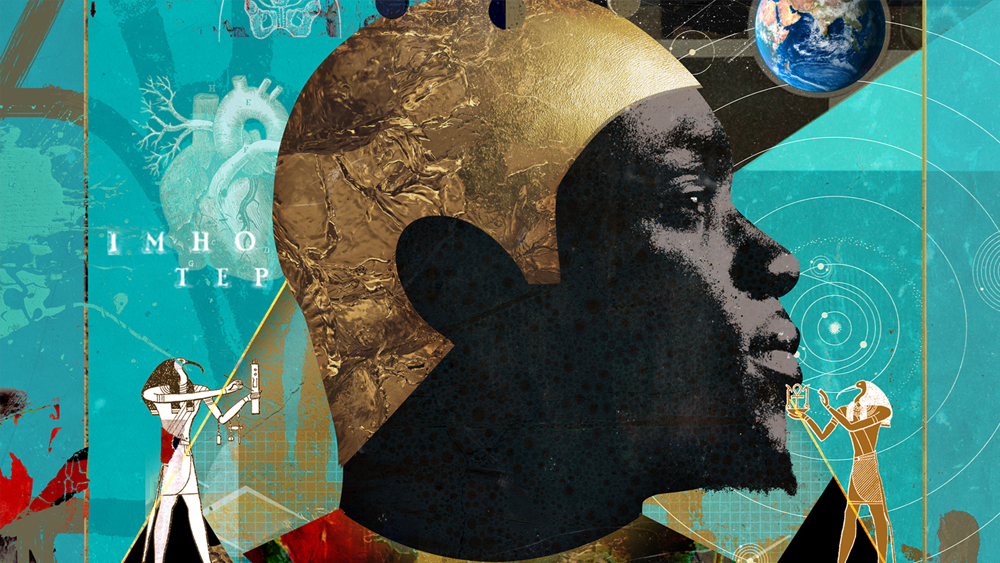
The illustration which is included in the CARGO Classroom lesson on Imhotep
Lawrence Hoo’s work experience
In 2015 Lawrence joined Kids Company in Bristol, before it closed later that year, as a creative writing tutor working with vulnerable children and young people.
From 2015 to 2016 Lawrence worked for Bath & North East Somerset Virtual School, which provides educational support to children in care throughout full-time education. He worked as a one to one tutor supporting a young person in care who had been excluded from school.
While Lawrence felt that he was making a difference in these young people’s lives, he felt like he could be helping more, and this led to the creation of the CARGO Movement.
The CARGO Movement
Lawrence Hoo and Chaz Golding founded the CARGO Movement, which was started in 2019.
CARGO stands for “Charting African Resilience Generating Opportunities”.
The CARGO Movement illuminates the contributions and achievements of people of African and African diaspora heritage, providing a more balanced understanding of the world we live in.
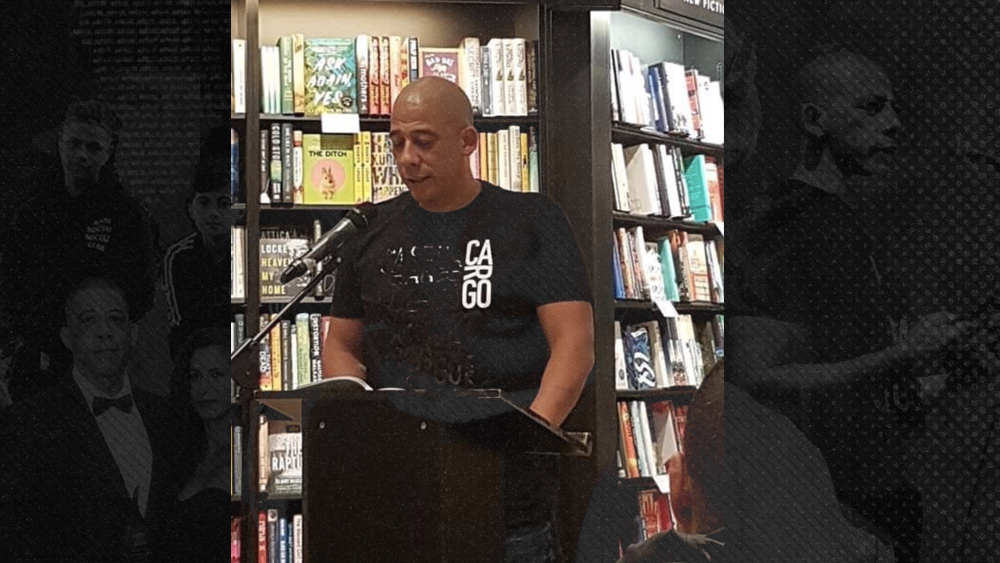
Lawrence at the CARGO book launch at Waterstones in 2019.
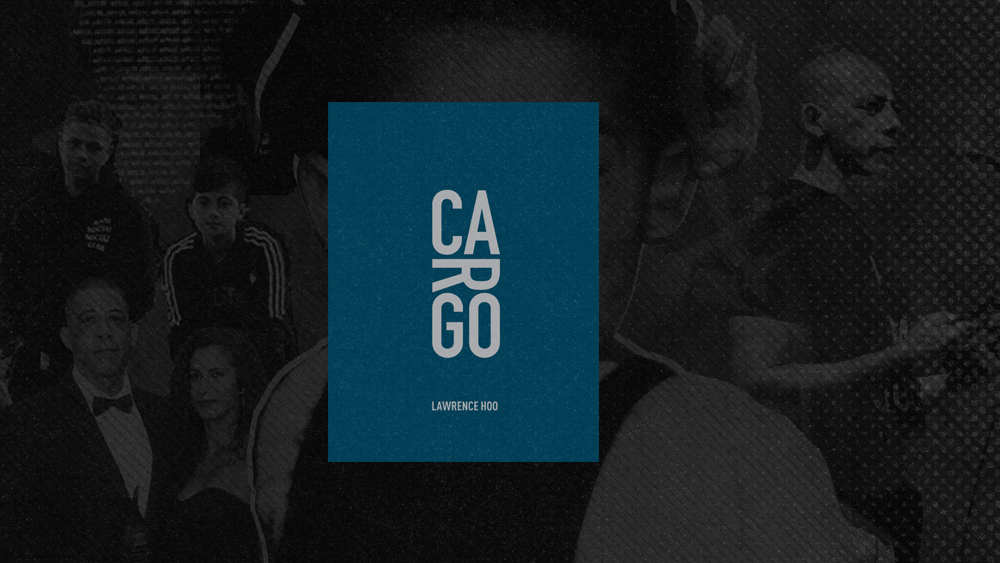
CARGO, a poetry collection published by Lawrence Hoo in 2019.
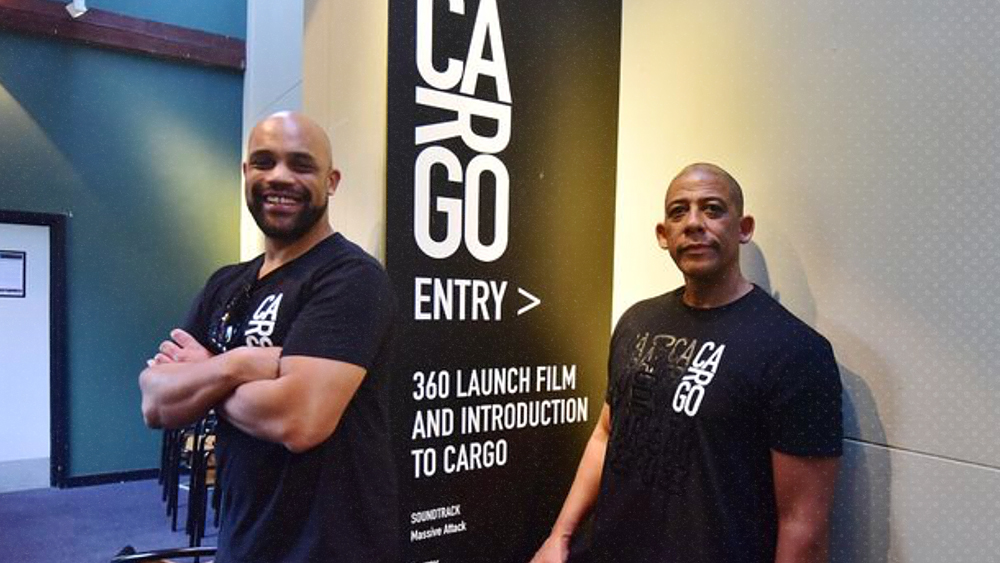
CARGO movement Founder’s, Chaz Golding and Lawrence Hoo, at its launch at the Watershed in October 2019.
CARGO classroom
CARGO Classroom uses poetry, illustrations, videos and text to evocatively celebrate the resilience and visionary leadership of African and African Diaspora individuals who have catalysed change and moved humanity forward.
It presents narratives from the past and present that enable people to visualise a future full of pride and possibilities.
CARGO Classroom is a response to:
1. The opportunity to celebrate African and African Diaspora leadership through key milestones and contributions made.
2. Inequalities in cultural engagement statistics and representation in Education worldwide.
3. A will to highlight the global relevance of African and African Diaspora histories.
CARGO Classroom’s main aim is to enhance and broaden the national curriculum, contributing creatively engaging materials which are as educational as they are innovative in form and content.
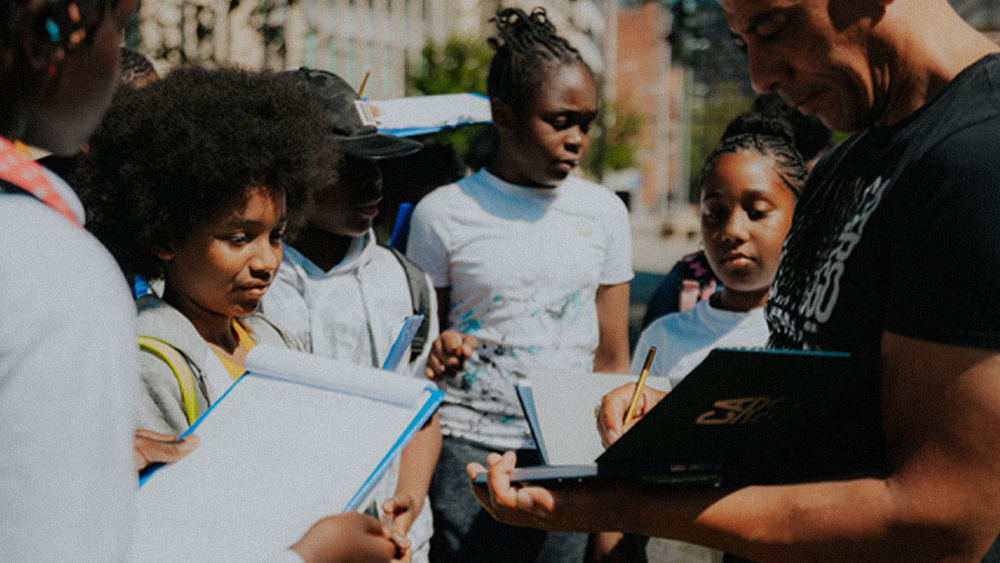
Learners from St Nick’s School in Bristol taking part in a CARGO workshop at the empty Colston plinth.
CARGO Classroom: Language
Here are examples of how CARGO Classroom interprets and amends language commonly used.
1. The use of: “African and African Diaspora Heritage” rather than “Black” and “European Heritage” rather than “White”.
This is to avoid using language that refers to “race” because “race” was an invented idea created approximately 500 years ago to divide humanity into higher and lower valued groups.
2. The use of: “Enslaved People” rather than “Slaves”.
The term “slave” dehumanises people of African and African Diaspora Heritage. By using the term “enslaved” we make it clear that someone removed their freedom from them.
3. The use of: “Forced Labour” rather than “Work” when referring to enslaved people.
This is to make clear that slavery was not a consensual working agreement or a mutually beneficial relationship.
Charting African Resilience Generating Opportunities
CARGO
2016 - Lawrence Hoo and Chaz Golding begin the CARGO project to illuminate the contributions and achievements of people of African and African Diaspora heritage. CARGO was initially going to be a poetic audio visual immersive installation in shipping containers.
2019 - Lawrence Hoo publishes his 3rd poetry collection CARGO, which is launched at Waterstones.
2019 - CARGO Movement is launched with an installation that took place at The Watershed .
2020 - CARGO’s new project CARGO Classroom release the first set of free online educational learning resources.
Charting African Resilience Generating Opportunities
CARGO
2021- CARGO Movement launch the People’s Platform, an interactive public art experience centred on Colston's empty plinth, and an invitation to engage in the discussion around who or what is celebrated in public spaces and how Bristol’s history and common values can be better reflected.
2022 - After a soft launch in 2020, 2022 saw the official launch of Universal City, an interactive three dimensional map of Bristol that will show an alternative view of the city.
2022 - CARGO Classroom launches their FutureLearn course to give teachers the confidence to explore ways to combat social injustices in school history curricula, in particular when teaching African and African diaspora histories. Giving them the tools and knowledge to implement a diverse and inclusive curriculum for students.
2022 - The BBC dedicate an episode of ‘We Are England’ to CARGO Classroom and their work on diversifying the curriculum.
2023 - CARGO Classroom’s resources are used globally and work on increasing the educational resources continues.
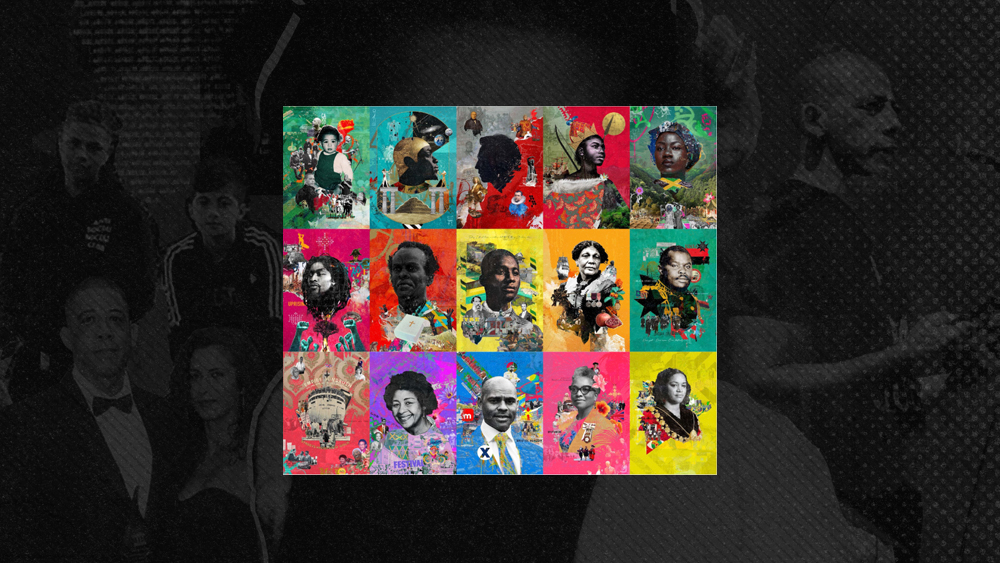
Classroom lessons
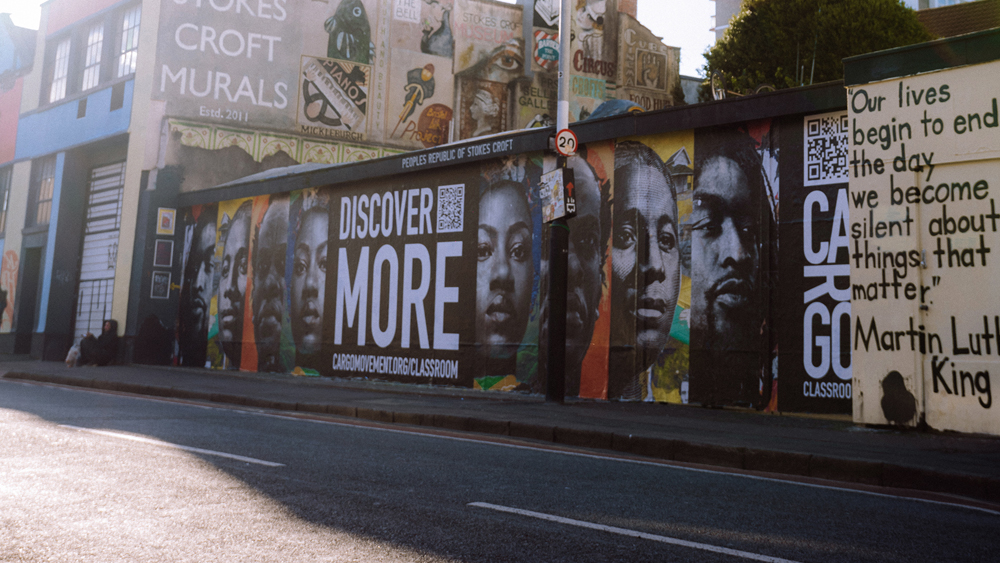
CARGO Classroom billboard celebrating the launch of the revolutionary lesson series
Dr Hoo
On 14 November 2022 the poet and educator Lawrence Hoo received an honorary Doctor of Letters degree from the University of Bristol – officially making him ‘Dr Hoo’.
On 14 November 2022 the poet and educator Lawrence Hoo received an honorary Doctor of Letters degree from the University of Bristol – officially making him ‘Dr Hoo’.
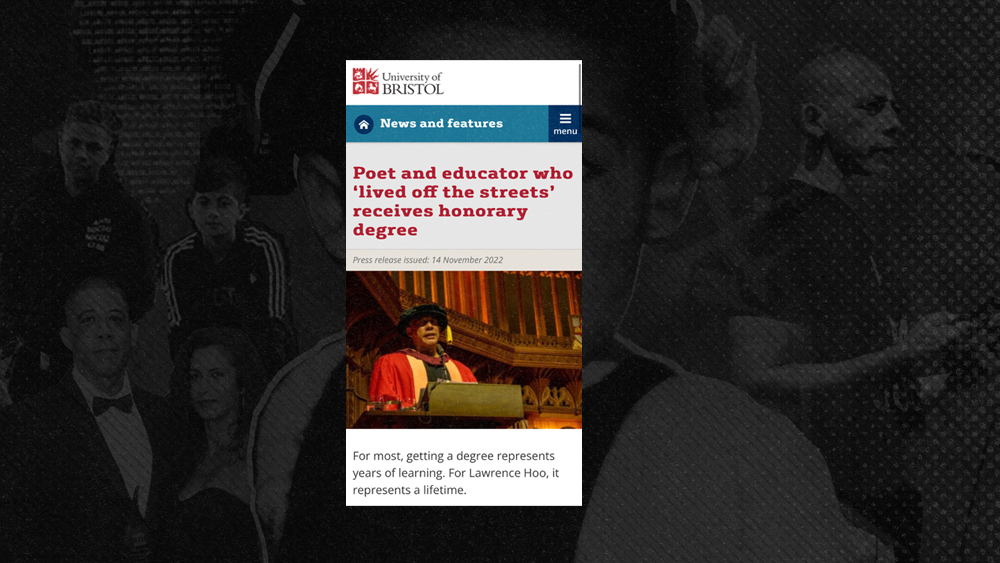
From Lawrence to you
While accepting his doctorate Lawrence told students: “As you now embark on your own journeys - turn a new page, starting a new chapter in the book of life - I wish you all well. I would just like you to always remember: you are valued and you are our present and future. So go forward and shine bright - and be the light we all need to see.”
Speaking after the ceremony, he said: “It’s great to have my work recognised, especially from within my own city, but I am accepting this on behalf of the communities I work with.”
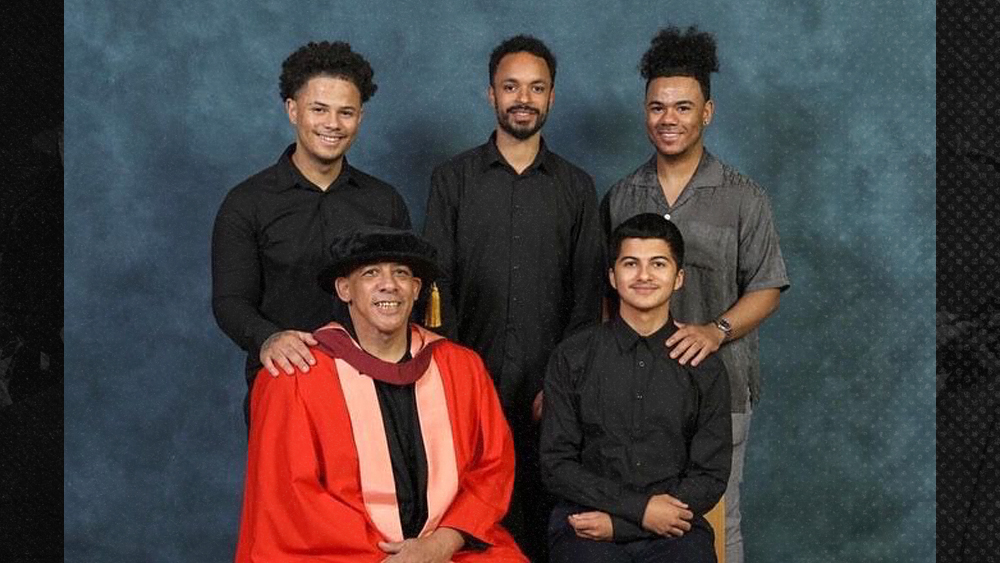
Dr Lawrence Hoo and his children (L/R: Soul, Myles, Caed, Mali)
Add a comment.
Please let us know your thoughts.
Choose your Avatar
I AM NOT A ROBOT
SUBMIT

"I would have loved to have seen things differently when I was younger."
Tom Simplson

"We’re slowly trying to find it ourselves, Because it was lacked in the curriculum"
A Student

"It's incredible that his history still hasn't been given a fair representation,"
Lawrence Hoo
"It has become a tsunami of enlightenment and information"
A Student
Please let us know your thoughts.
Choose your Avatar
I AM NOT A ROBOT
SUBMIT
"I would have loved to have seen things differently when I was younger."
Tom Simplson
"We’re slowly trying to find it ourselves, Because it was lacked in the curriculum"
A Student
"It's incredible that his history still hasn't been given a fair representation,"
Lawrence Hoo
"It has become a tsunami of enlightenment and information"
A Student