

Loading Lesson


Jamaica: A Brief Introduction
The Caribbean island of Jamaica was originally inhabited by the Redware people, the Caribs, and the Arawak group of indigenous peoples including the Taíno people. The island was named “Xaynaca” by its early inhabitants, which meant “land of wood and water”. Christopher Columbus is believed to have been the first European to reach Xaynaca in 1494, after which it was colonised* by the Spanish. The Spanish changed the name of the island to “Jamaica”.
The Spanish enslaved Arawak people and some historians believe that by 1602 the Arawak people were extinct. However, some had escaped the Spanish and settled in the mountainous regions of Jamaica. The Spanish also enslaved people from West Africa and transported them to the island.
* Colonised = To settle among and take control over a land and its indigenous people, often through forceful means.
* Enslave = To cause someone to lose their freedom of choice and action; slave.

The Caribbean island of Jamaica was originally inhabited by the Redware people, the Caribs, and the Arawak group of indigenous peoples including the Taíno people. The island was named “Xaynaca” by its early inhabitants, which meant “land of wood and water”. Christopher Columbus is believed to have been the first European to reach Xaynaca in 1494, after which it was colonised* by the Spanish. The Spanish changed the name of the island to “Jamaica”.
The Spanish enslaved Arawak people and some historians believe that by 1602 the Arawak people were extinct. However, some had escaped the Spanish and settled in the mountainous regions of Jamaica. The Spanish also enslaved people from West Africa and transported them to the island.
* Colonised = To settle among and take control over a land and its indigenous people, often through forceful means.
* Enslave = To cause someone to lose their freedom of choice and action; slave.
Jamaica: A Brief Introduction
In 1655 the English invaded Jamaica and defeated the Spanish to claim Jamaica as their colony*. The sugar cane industry replaced piracy as British Jamaica’s main source of income. Enslaved people were forced to work without rest or pay, and regularly abused.
*Colony = a country that is owned by another country.
In 1655 the English invaded Jamaica and defeated the Spanish to claim Jamaica as their colony*. The sugar cane industry replaced piracy as British Jamaica’s main source of income. Enslaved people were forced to work without rest or pay, and regularly abused.
*Colony = a country that is owned by another country.

Christmas Uprising
Enquiry Question - What would you like to know about this person?
“We must be content to die for the benefit of the rest. I, for one, am ready to die, in order that the rest may be free… I depend for salvation upon the Redeemer, who shed his blood upon Calvary for sinners. ”
Samuel Sharpe
“We must be content to die for the benefit of the rest. I, for one, am ready to die, in order that the rest may be free… I depend for salvation upon the Redeemer, who shed his blood upon Calvary for sinners. ”
Samuel Sharpe
Christmas 1831
Just after Christmas 1831 enslaved men and women on the island of Jamaica took part in a peaceful strike. They wanted to be paid for their work and be allowed to have some free time. When the demands were not met, the largest revolt ever seen across the British Caribbean erupted, it took place over 750 square miles, involved thousands of people and forced King William IV to pass the Slave Emancipation Act in 1833 which became law a year later. More than 800,000 people were set free as a result.
Just after Christmas 1831 enslaved men and women on the island of Jamaica took part in a peaceful strike. They wanted to be paid for their work and be allowed to have some free time. When the demands were not met, the largest revolt ever seen across the British Caribbean erupted, it took place over 750 square miles, involved thousands of people and forced King William IV to pass the Slave Emancipation Act in 1833 which became law a year later. More than 800,000 people were set free as a result.

Samuel Sharpe
Listen to the following poem: Christmas Uprising
Written by Lawrence Hoo, Performed by Zed Regal.
PLAY
Listen to the following poem: Christmas Uprising
Written by Lawrence Hoo, Performed by Zed Regal.
PLAY
Baptist Deacon
Samuel Sharpe was a self-educated Baptist Deacon on the island of Jamaica, who was permitted to travel around the island to lead prayer. He observed the hardships suffered by the many. At age 31 he decided to use this freedom to organise a strike for better conditions. After a meeting in mid December, Samuel asked community members to promise on the Bible that they would support this action. Samuel travelled the island recruiting groups who would be involved in the strike. The sugar plantation system in Jamaica had a hierarchy of workers. These groups included people who received comparatively good treatment, but Samuel’s intelligence and communication skills convinced them to join the strike. In turn other workers on the plantations also agreed to strike alongside them. Some workers had large frame houses with wooden floors, ideal for planning meetings and for storing weapons in case the strike became violent.
Samuel Sharpe was a self-educated Baptist Deacon on the island of Jamaica, who was permitted to travel around the island to lead prayer. He observed the hardships suffered by the many. At age 31 he decided to use this freedom to organise a strike for better conditions. After a meeting in mid December, Samuel asked community members to promise on the Bible that they would support this action. Samuel travelled the island recruiting groups who would be involved in the strike. The sugar plantation system in Jamaica had a hierarchy of workers. These groups included people who received comparatively good treatment, but Samuel’s intelligence and communication skills convinced them to join the strike. In turn other workers on the plantations also agreed to strike alongside them. Some workers had large frame houses with wooden floors, ideal for planning meetings and for storing weapons in case the strike became violent.
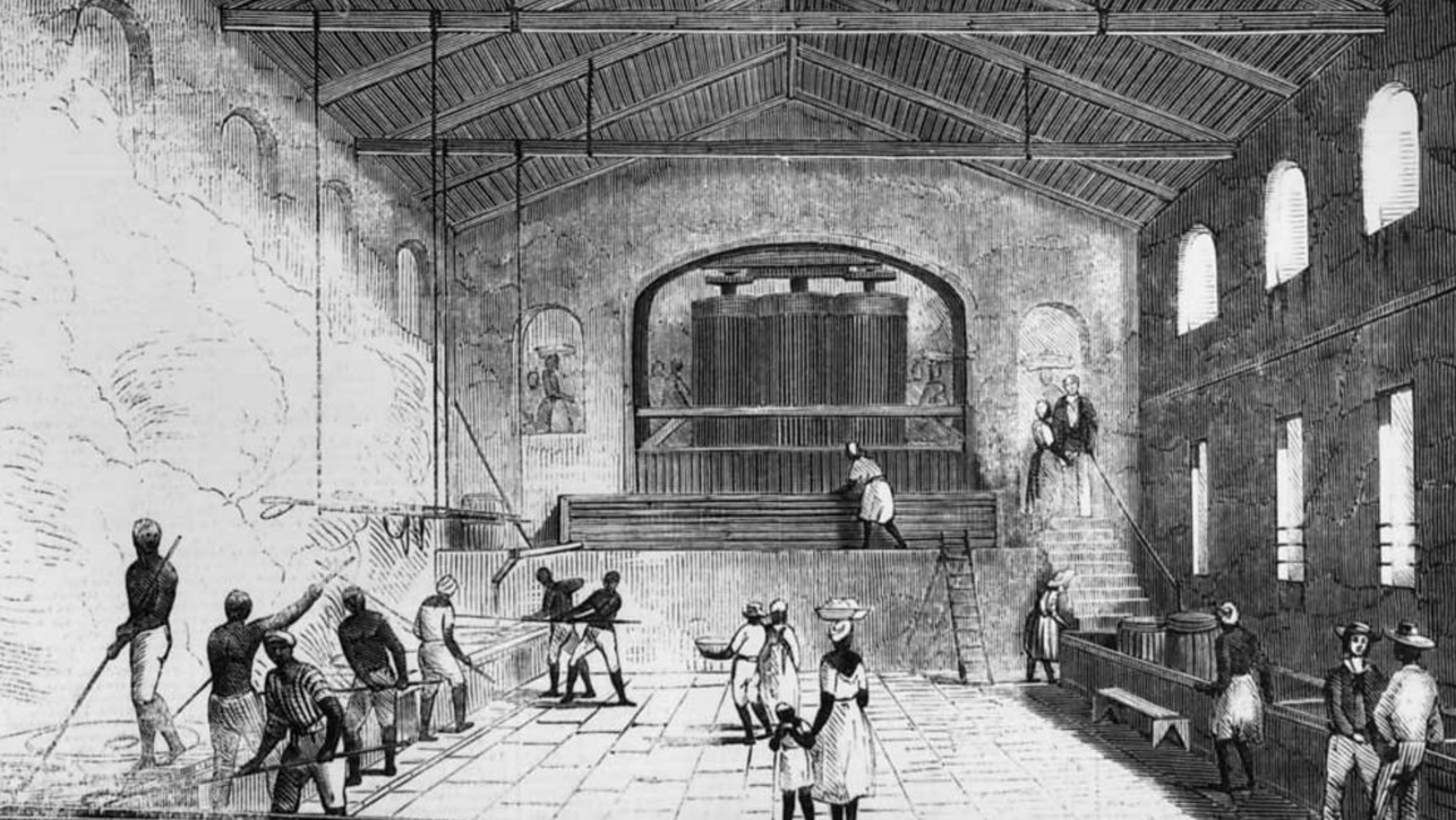
Jamaican workhouse
Rebellions
Samuel Sharpe knew about past rebellions on the Caribbean islands, and the importance of secrecy. He asked followers to swear an oath to an act of resistance, united in faith and secrecy. Samuel enlisted experienced workers such as blacksmiths, carpenters and head sugar boilers. House servants, field plantation workers and cargo ship workers formed a communication network. They knew about the movement of troops and the latest government orders throughout the Island. Women acted as lookouts and go-betweens.
Samuel Sharpe knew about past rebellions on the Caribbean islands, and the importance of secrecy. He asked followers to swear an oath to an act of resistance, united in faith and secrecy. Samuel enlisted experienced workers such as blacksmiths, carpenters and head sugar boilers. House servants, field plantation workers and cargo ship workers formed a communication network. They knew about the movement of troops and the latest government orders throughout the Island. Women acted as lookouts and go-betweens.
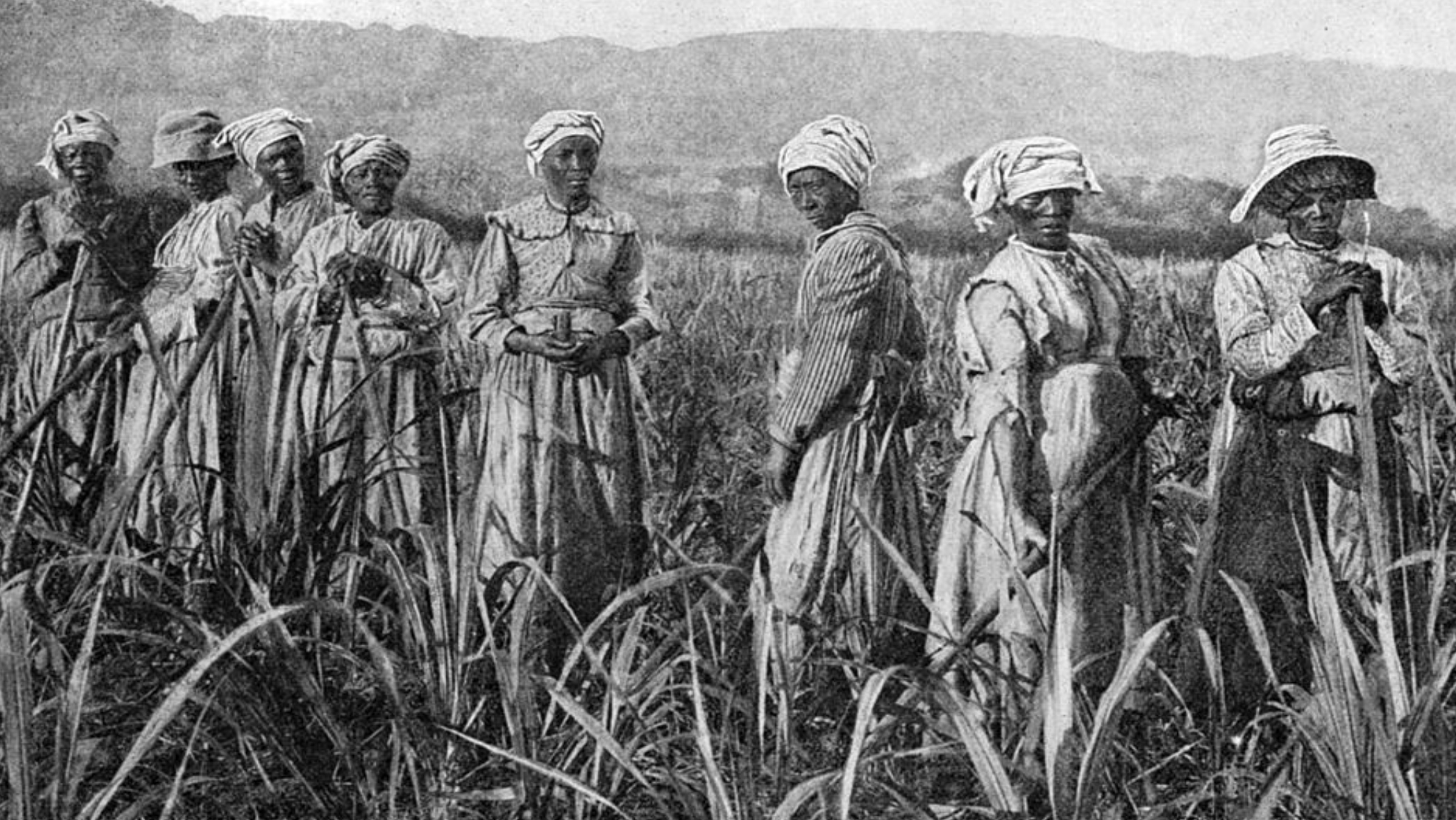
Jamaica’s 1831 Revolt Dealt a Hammer Blow to Colonial Slavery
Huge risks
The risks were huge. It was common for men and women on Jamaican plantations to be beaten viciously. Witnesses even told of pregnant women being flogged with a cart whip ten feet long. The punishment for uprising was execution, the heads of rebels were displayed on stakes to give this message.
The risks were huge. It was common for men and women on Jamaican plantations to be beaten viciously. Witnesses even told of pregnant women being flogged with a cart whip ten feet long. The punishment for uprising was execution, the heads of rebels were displayed on stakes to give this message.
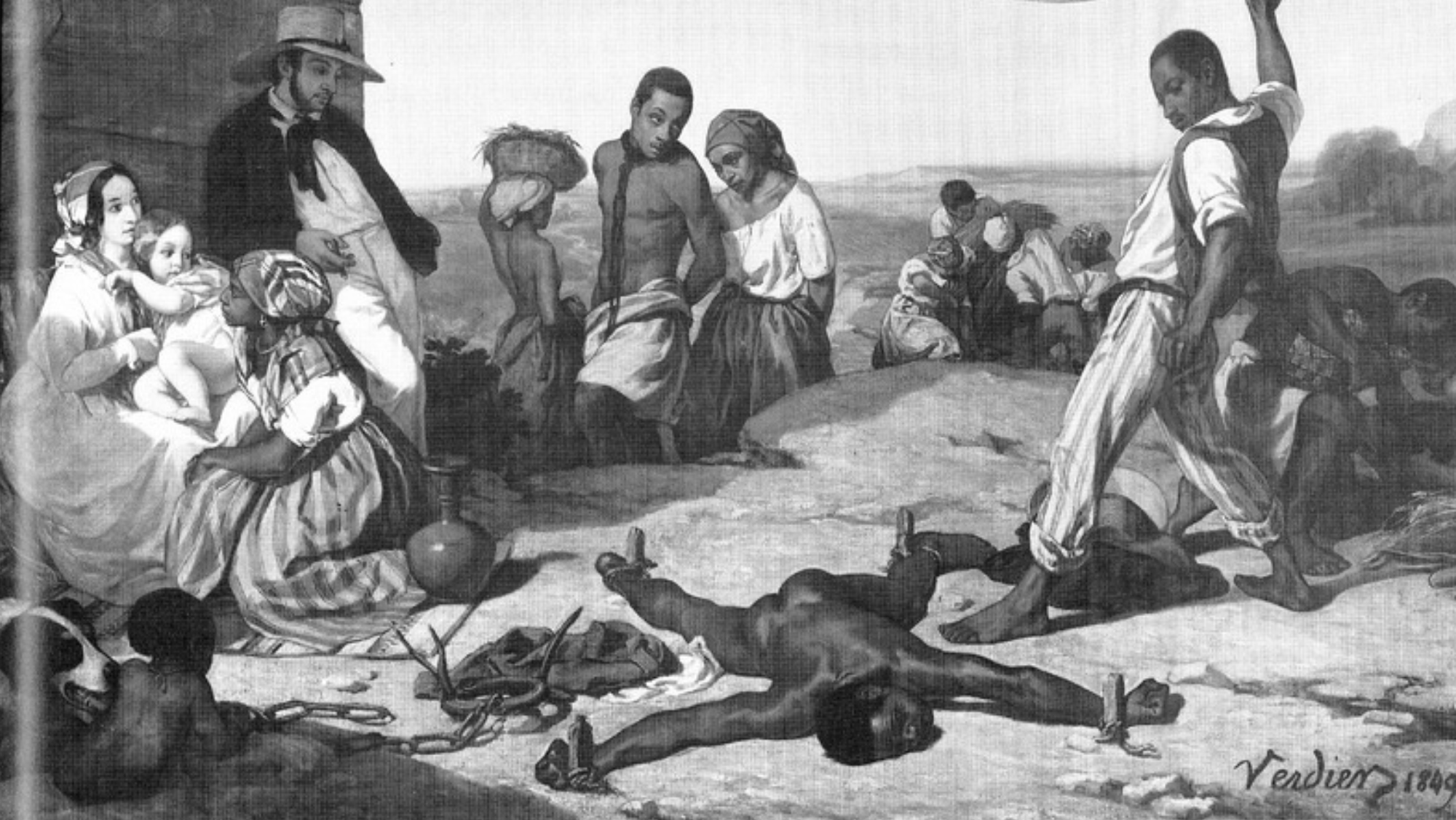
Punishment for revolt, Painted by Marcel Verdier
Demands of Samuel Sharpe
When the demands of Samuel Sharpe and his followers were refused, an uprising began. Plantation houses were burnt as signals across the island, 145 were destroyed in total. More than twenty thousand men and women seized control over 750 square miles and more than one million pounds in damage was caused. It took almost all of January 1832 for British troops to suppress the uprising and arrest Samuel Sharpe.
When the demands of Samuel Sharpe and his followers were refused, an uprising began. Plantation houses were burnt as signals across the island, 145 were destroyed in total. More than twenty thousand men and women seized control over 750 square miles and more than one million pounds in damage was caused. It took almost all of January 1832 for British troops to suppress the uprising and arrest Samuel Sharpe.
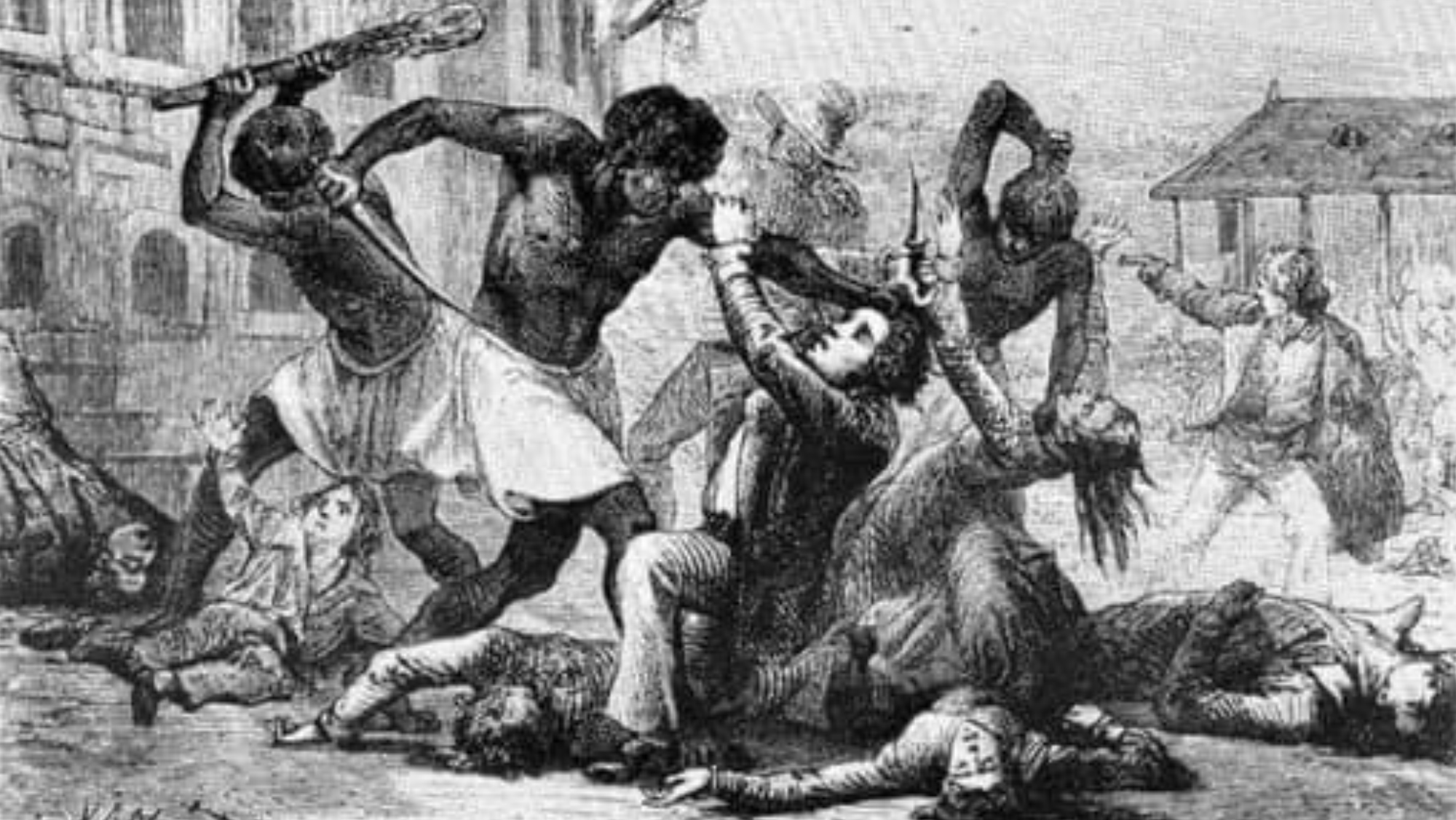
Christmas Rebellion, Jamaica, 1831
500 enslaved people
Over 500 enslaved people were convicted, many of those were executed. Those who escaped the death penalty were treated brutally. Records show many of the women involved received hundreds of lashes with a whip or were transported to another island. Samuel Sharpe was named as the key figure behind the uprising, he was captured and hanged in Montego Bay in May 1832.
Over 500 enslaved people were convicted, many of those were executed. Those who escaped the death penalty were treated brutally. Records show many of the women involved received hundreds of lashes with a whip or were transported to another island. Samuel Sharpe was named as the key figure behind the uprising, he was captured and hanged in Montego Bay in May 1832.
Significance of The Christmas Uprising
“This is a really crucial event. It demonstrates to people back in Britain that ... if slavery is going to produce such extraordinary scenes of brutality more and more people in Britain aren’t prepared to support that anymore. So, this rebellion I mean on its own you couldn’t say it ended slavery, but it ...means that slavery is no longer politically viable [sensible] and you know it's only a couple of years later that you get the...Act for The Abolition of Slavery and the beginnings of the dismantling [break up] of the slave system itself” Diana Payton, Historian of the Caribbean, University of Newcastle.
“This is a really crucial event. It demonstrates to people back in Britain that ... if slavery is going to produce such extraordinary scenes of brutality more and more people in Britain aren’t prepared to support that anymore. So, this rebellion I mean on its own you couldn’t say it ended slavery, but it ...means that slavery is no longer politically viable [sensible] and you know it's only a couple of years later that you get the...Act for The Abolition of Slavery and the beginnings of the dismantling [break up] of the slave system itself” Diana Payton, Historian of the Caribbean, University of Newcastle.
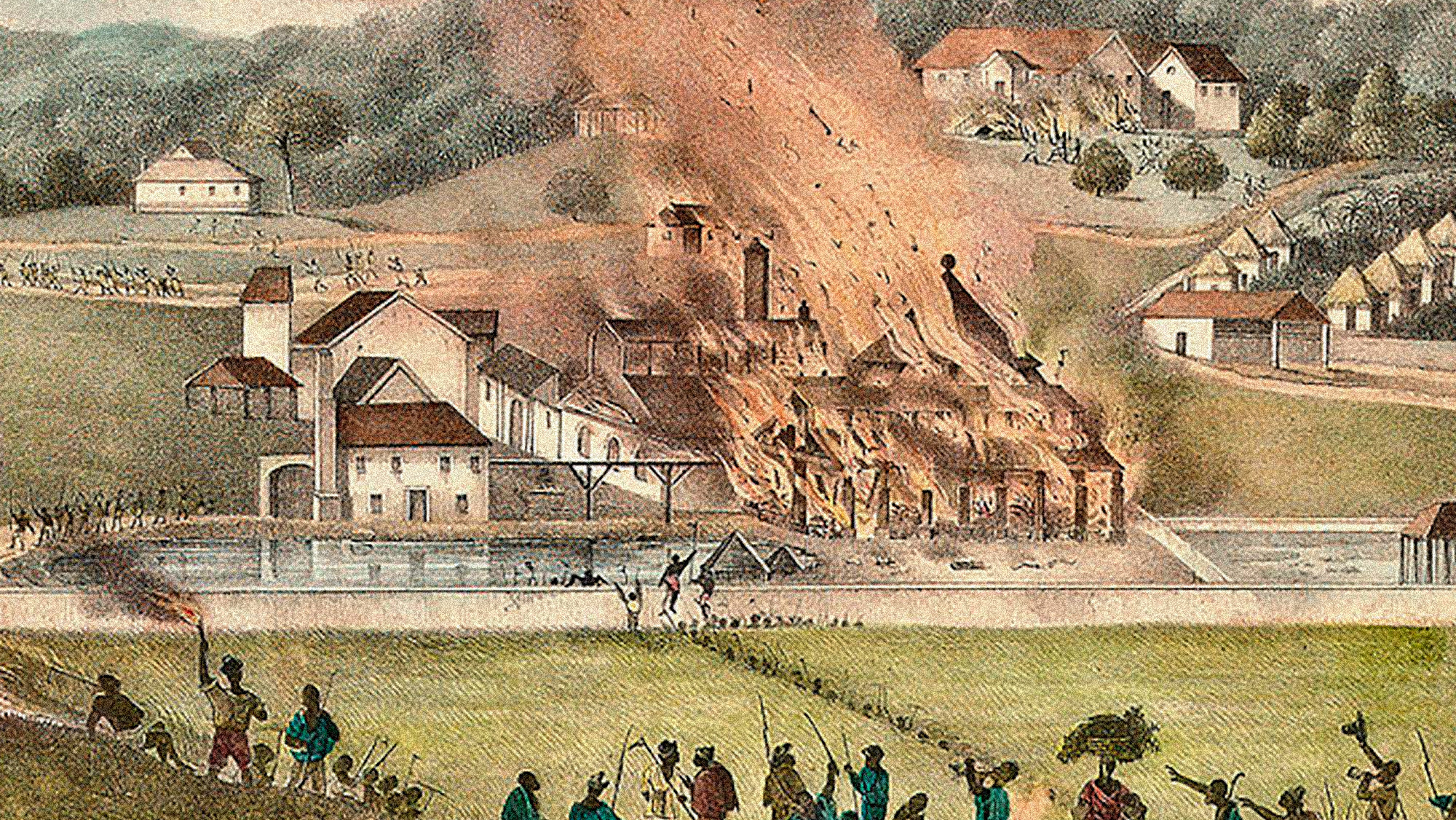
Painting by Adolphe Duperly depicting the Roehampton Estate

Attitude
Samuel Sharpe’s Attitude
Do you think that the price paid by Samuel Sharpe and the other 500 enslaved people, for uprising, was too high?
Do you think that the price paid by Samuel Sharpe and the other 500 enslaved people, for uprising, was too high?

Price Paid

Sam Sharpe on the Jamaican fifty dollar note.

Sam Sharpe Square in Montego Bay, Jamaica
Sam Sharpe Square in Montego Bay, Jamaica
The Sam Sharpe Square in Montego Bay, Jamaica, gives visitors a snapshot of Jamaica during the 1800s. It was renamed from Charles Square to honour Sam Sharpe, the Jamaican National hero and anti-slavery activist.
The Sam Sharpe Square in Montego Bay, Jamaica, gives visitors a snapshot of Jamaica during the 1800s. It was renamed from Charles Square to honour Sam Sharpe, the Jamaican National hero and anti-slavery activist.
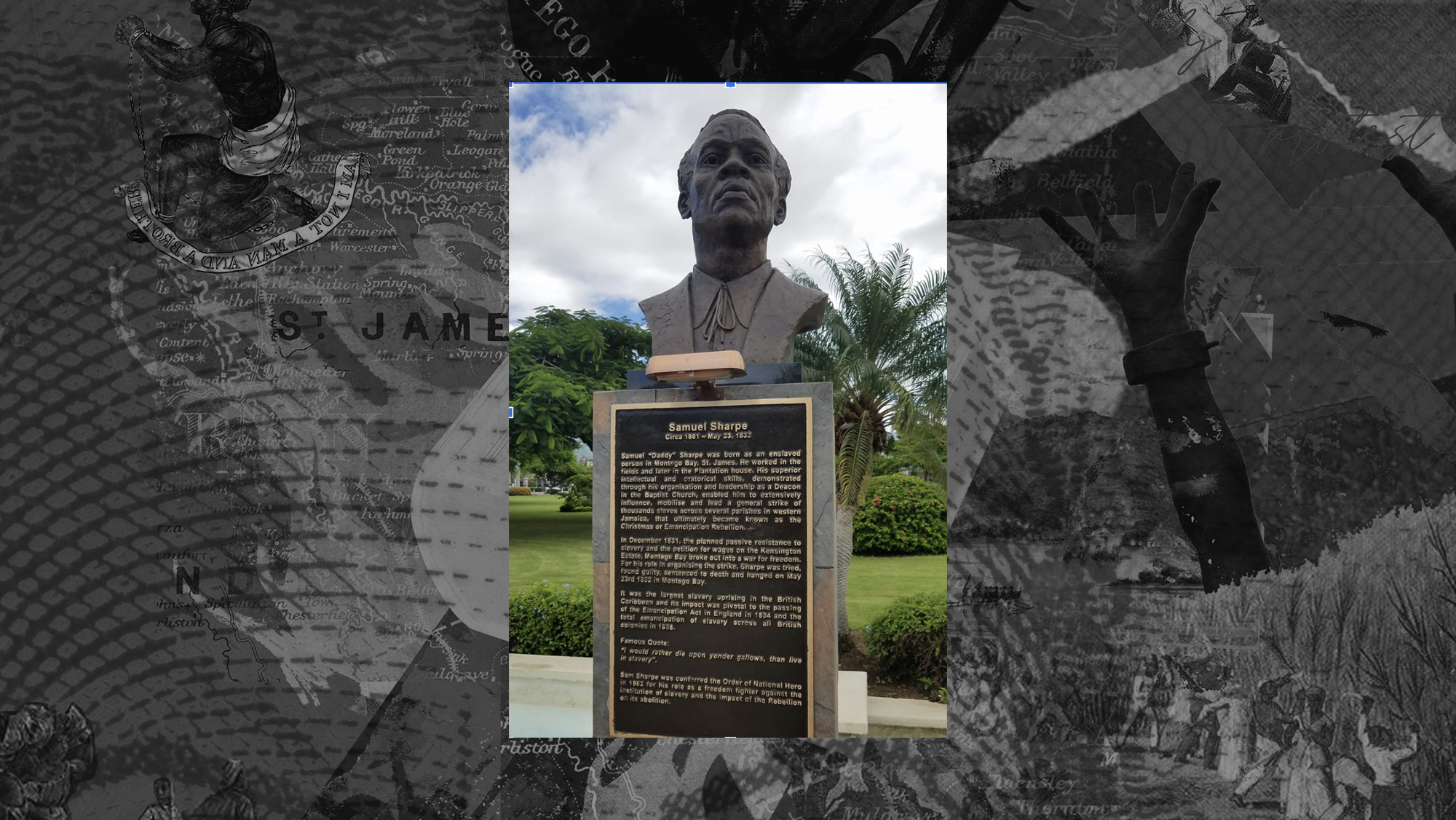
Statue of Samuel Sharpe. He stands in Emancipation Park
as one of Jamaica’s national heroes.
as one of Jamaica’s national heroes.
Add a comment.
Please let us know your thoughts.
Choose your Avatar
I AM NOT A ROBOT
SUBMIT

"I would have loved to have seen things differently when I was younger."
Tom Simplson

"We’re slowly trying to find it ourselves, Because it was lacked in the curriculum"
A Student

"It's incredible that his history still hasn't been given a fair representation,"
Lawrence Hoo
"It has become a tsunami of enlightenment and information"
A Student
Please let us know your thoughts.
Choose your Avatar
I AM NOT A ROBOT
SUBMIT
"I would have loved to have seen things differently when I was younger."
Tom Simplson
"We’re slowly trying to find it ourselves, Because it was lacked in the curriculum"
A Student
"It's incredible that his history still hasn't been given a fair representation,"
Lawrence Hoo
"It has become a tsunami of enlightenment and information"
A Student