

Loading Lesson
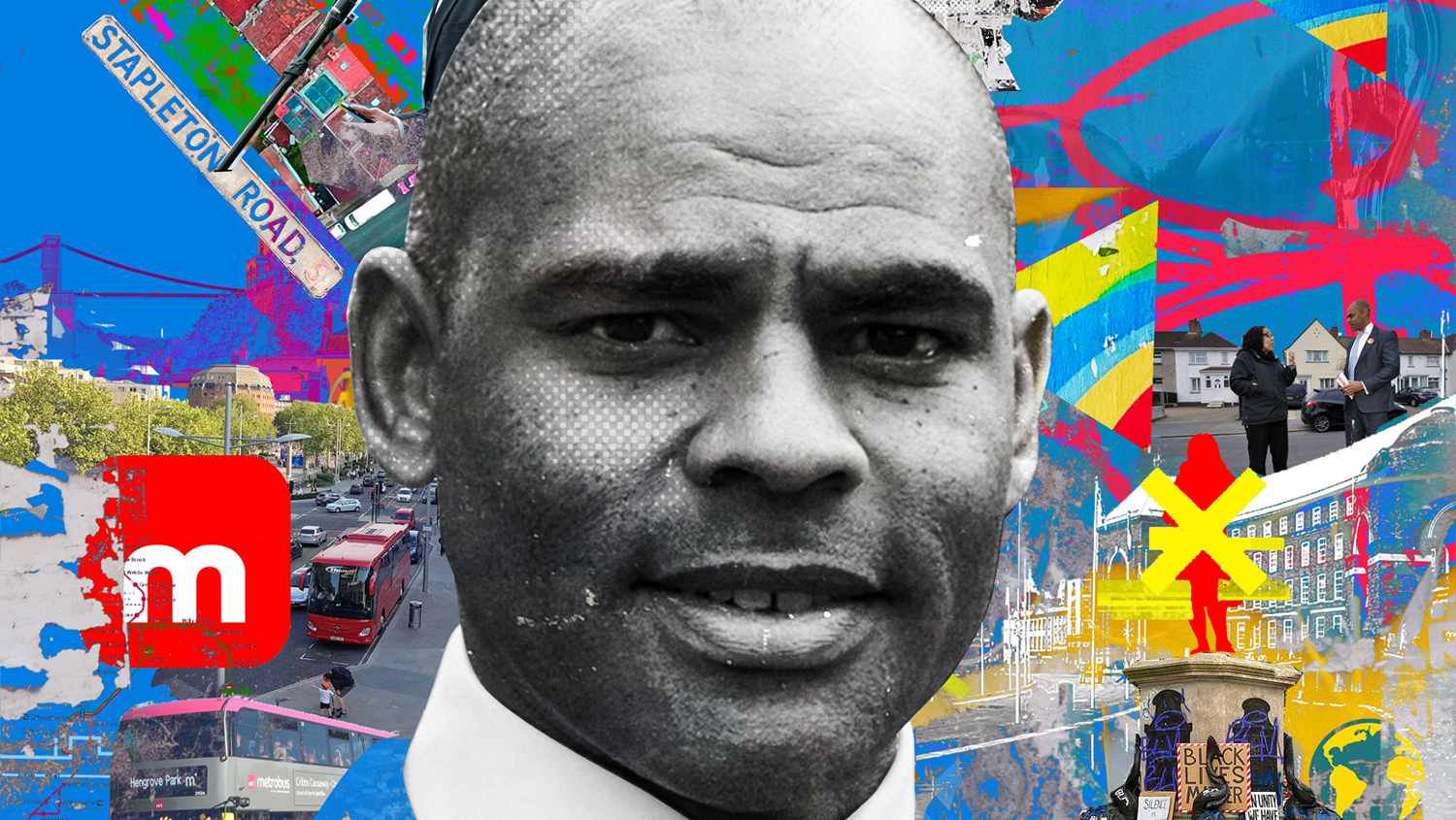

Bristol: A Brief Introduction
Today, the city of Bristol has a population of 467,000 and it is the most populous city in South West England. However, Bristol began life as a small settlement known as Brycgstow, established by the year 1000 AD where the rivers Frome and Avon join. The town became a county in 1373, the first town in England to be given this status. During this period, Bristol became a shipbuilding and manufacturing centre.
Since the 15th century Bristol has developed into a major UK city. The main reason for this is the international trade that took place from its port that brought a great deal of wealth to the city and to the merchants who controlled the Transatlantic Slave trade. These merchants included William de la Founte in the 15th century, Robert Kitchen in the 16th century and George White in the 17th century. These merchants transported enslaved people from West Africa to colonies in the Caribbean and America to provide free labour. This free labour enabled other trades and industries to flourish, including tobacco, sugar, cotton and banking.

Today, the city of Bristol has a population of 467,000 and it is the most populous city in South West England. However, Bristol began life as a small settlement known as Brycgstow, established by the year 1000 AD where the rivers Frome and Avon join. The town became a county in 1373, the first town in England to be given this status. During this period, Bristol became a shipbuilding and manufacturing centre.
Since the 15th century Bristol has developed into a major UK city. The main reason for this is the international trade that took place from its port that brought a great deal of wealth to the city and to the merchants who controlled the Transatlantic Slave trade. These merchants included William de la Founte in the 15th century, Robert Kitchen in the 16th century and George White in the 17th century. These merchants transported enslaved people from West Africa to colonies in the Caribbean and America to provide free labour. This free labour enabled other trades and industries to flourish, including tobacco, sugar, cotton and banking.
Bristol: A Brief Introduction
As an industrial city, Bristol is home to communities from many different backgrounds, including Bristolians of South Asian, East African, and Caribbean heritage. In the years following the Second World War, the British Government encouraged citizens from the British colonies abroad including the Caribbean to come and settle in the UK and contribute to the rebuilding of the economy.
Despite this encouragement, when these communities arrived in the country they were met with a lot of discrimination that refused them access to homes, jobs and positions of influence in the city. Before the Race Relations Act of 1968 immigrant communities had no legal protections against this discrimination. Even now, inequality still exists in the city of Bristol and across the country.
Bristol consistently ranks in the top 10 worst cities in the UK to grow up disadvantaged and African heritage in terms of schooling outcomes and employment opportunities. In 2017, an organisation that investigates racial inequality, The Runnymede Trust found that Bristol was ranked 159th out of 348 districts, for educational inequality. However, for people of African descent Bristol has the 3rd highest level of educational inequality in England and Wales. In 2020 the Bristol Post reported that one in six children are living in poverty in Bristol.
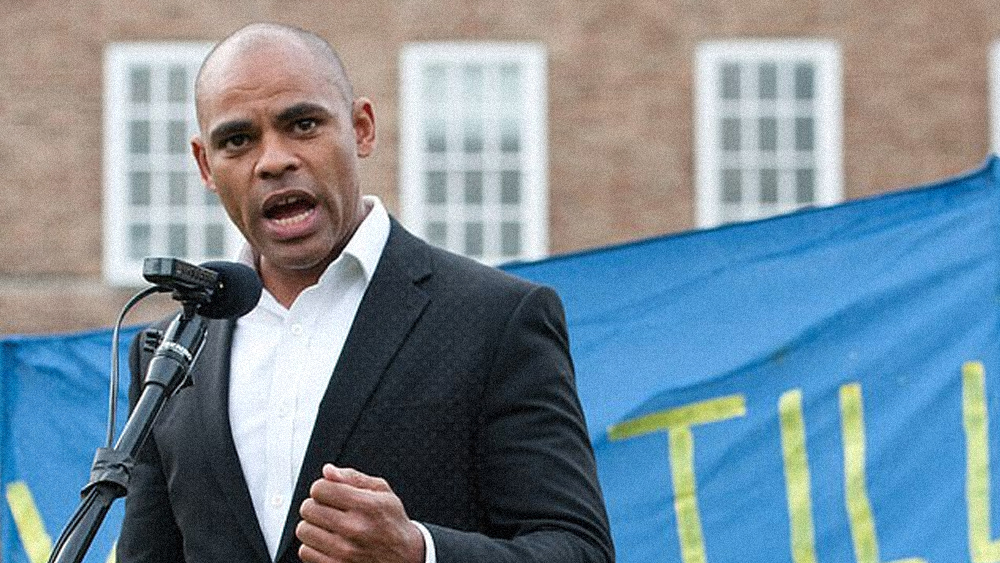
Marvin Rees
Marvin Rees’ Childhood
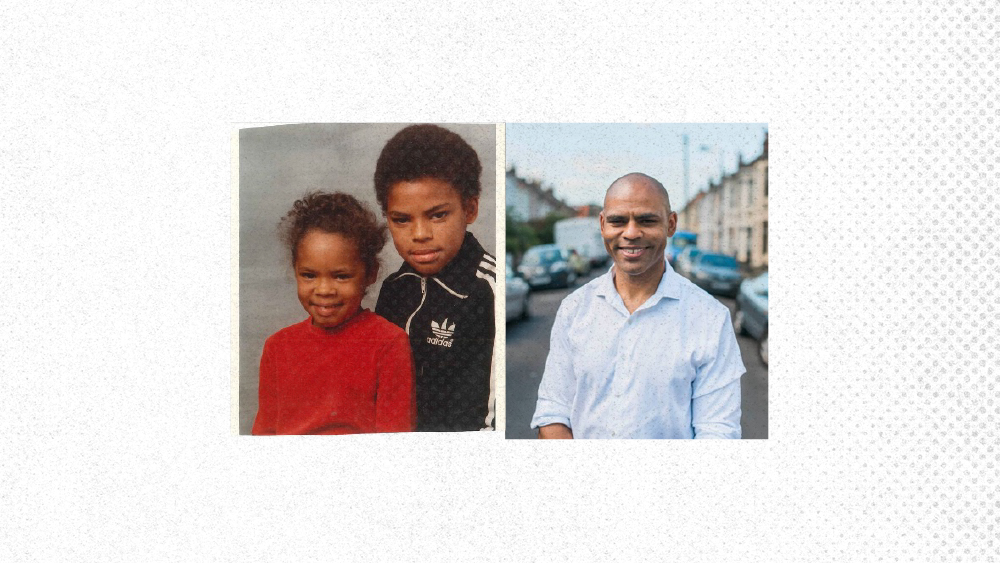
Marvin Rees was born in Bristol in 1972 to a European-British mother and African-Jamaican father.
He was brought up in Bristol by his mother, moving between St Pauls, Lawrence Weston and Easton which are areas where many different communities live, including Bristol’s South Asian, Caribbean and Somali communities.
"I didn't really enjoy growing up there. There was racial tension, being mixed race and from a poor family it was quite tough…It gave me a real desire to overcome poverty and racism. It's given me something to work to"
- Marvin Rees, about growing up in Easton.
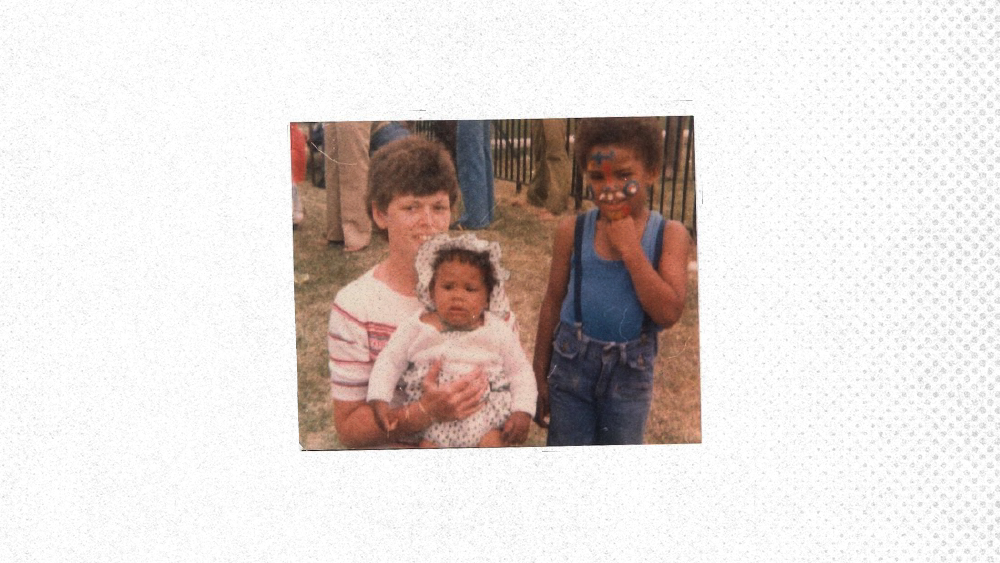
Marvin Rees (right) with his mother and sister
Marvin Rees Timeline
1972 - 1990 Marvin Rees is born in Bristol. He attends local state schools.
1990 - 1993 Marvin Rees completes his Degree in Economic History and Politics from the University of Wales in Swansea.
1993 - 1995 Marvin Rees completes his Master’s Degree in Political Theory and Government at the University of Wales in Swansea.
2000 - 2001 Marvin Rees obtains a Master’s degree in global economic development at Eastern University in Pennsylvania, US.
2004 - Marvin Rees joins The Labour Party. 2006 - Marvin Rees participates in Operation Black Vote’s MP shadowing scheme.
2006 - 2008 Marvin Rees is Communications and Events Manager at the Black Development Agency.
2007 - Marvin Rees contributes to Bristol’s bicentenary commemoration of the Abolition of The Slave Trade Act in 1807.
2007 - 2011 Marvin Rees is a Commissioner for the Bristol Legacy Commission.
2008 - 2013 Marvin Rees is a Programme Manager for the NHS, and focuses on promoting racial equality in Mental Healthcare.
2010 - Marvin Rees completes the World Fellows Program at Yale University.
2012 - Marvin Rees is the selected Labour candidate for Mayor of Bristol, but he comes second after George Ferguson.
2016 - Marvin Rees stands again as the Labour candidate for Mayor of Bristol, and wins. He becomes the first Directly-Elected Mayor of a European city of African descent.
2020 - Mayoral election is postponed due to the Covid-19 pandemic.
2021 - Marvin Rees is re-elected as Mayor of Bristol.
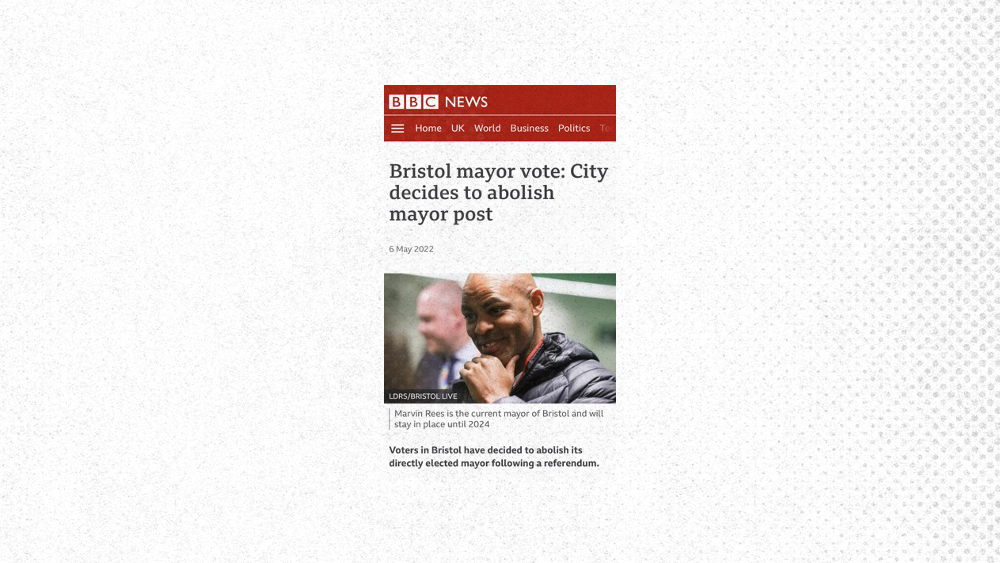
2022 - Mayoral referendum, Bristol residents voted to abolish the role of Mayor of Bristol.
2024 - Committee system replaces the role of directly elected mayor of Bristol.
Brother Marvin
Watch the poem written by Lawrence Hoo Performed by Solomon OB
PLAY
Watch the poem written by Lawrence Hoo Performed by Solomon OB
PLAY
Bristol City Council
Bristol City Council is the local authority of Bristol, England. The council is a unitary authority, and is unusual in the United Kingdom in that its executive function is controlled by its directly elected mayor. The Mayor of Bristol is the head of government and the chief executive of the Bristol City Council. The mayor is a directly elected politician who, along with the 70 members of Bristol City Council, is responsible for the strategic government of the city of Bristol. The Mayor has ultimate responsibility for all major policy decisions. Whilst some of this responsibility may be shared with the other 70 members, the Bristol Mayor makes 'executive' decisions.
Executive decisions are the ones that a Mayor can decide alone. These include some decisions on planning, employment and legal decisions. An elected Mayor can also form a group of councillors (called a Cabinet) and give them powers over parts of the Council’s decision-making.
Bristol’s first Directly Elected City Mayor was George Ferguson, elected in 2012 - 2016. Marvin Rees was elected in 2016, and re-elected in 2021.
The Labour Party
Marvin Rees is a member of the Labour Party. This is a *political party that was set up in 1900. It is one of the largest political parties in Europe, it has more than twice the number of members (430,000 in 2021) as the UK Conservative party (160,000) and is the main opposition to the UK Conservative Party. British Prime Ministers who have been members of the Labour Party include Tony Blair and Clement Attlee.
The Labour Party was set up in the late 19th century in order to represent the demands of the British working class. It is described as being on the centre-left wing, which means the Labour Party wants to reduce the gap between rich and poor and make society more equal. One of the ways that the Labour Party wants to do this is by taxing rich people to pay for public services such as free education and free healthcare (the National Health Service) so that people who are not rich can still be looked after.
*Political party = A political party is a group of people with similar ideas and beliefs who have come together to work to achieve their aims.
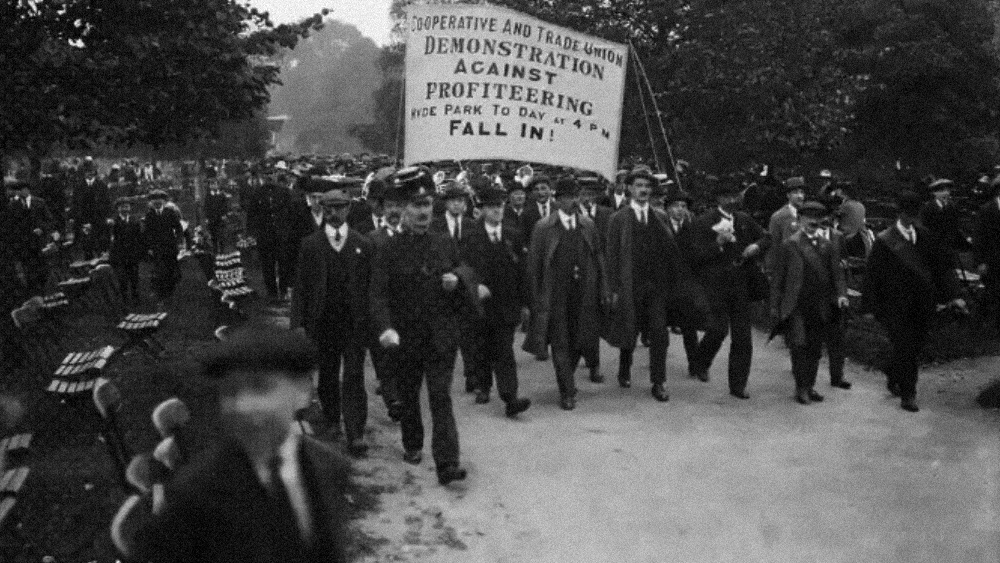
Cooperative and trade union members on an anti-profiteering demonstration in Hyde Park, London, in 1919
The Legacy Commission 2008 - 2011
The Legacy *Commission was set up in June 2008 to tackle inequalities in education, health and cultural representation among African-Caribbean, Asian and African communities. It grew out of the 2007 commemoration of the 200th anniversary of the abolition of the slave trade.
The 3 year project had a budget of £250,00 a year from the Liberal democrat-run council and attracted more than £1.5 million in match funding and an additional £130,00 was awarded in 2011. In total the Legacy Commission was awarded £2.38M over a period of three years and Marvin Rees was one of the Commissioners who decided how the money was to be spent.
In 2017 The Runnymede Trust produced research about Bristol which revealed that it was still the city where ethnic minorities were the most disadvantaged when it came to education and employment.
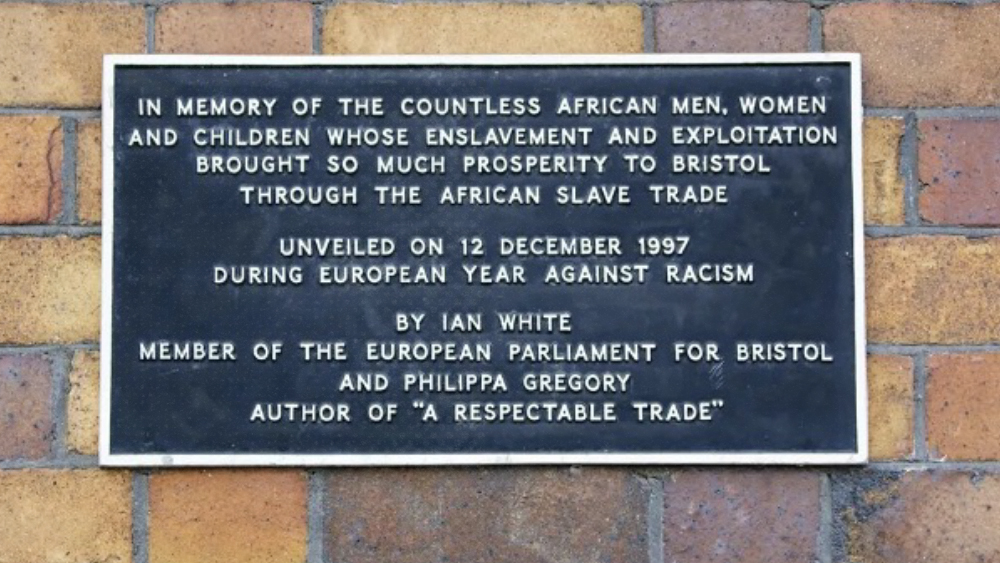
Apart from a small exhibition at the MShed museum, a small plaque on the outside, and the name of Pero’s Bridge across Bristol harbour, in 2021 Bristol has no noticeable or significant memorial to the African people enslaved and transported by Bristol’s merchant *elite, despite the £2.38million that was given to tackle inequality for Bristol’s African-Caribbean, Asian and African communities.
*Commission = a group of people set up in order to achieve a particular aim.
*Elite = the richest, most important people.
The Society of Merchant Venturers
The Society of Merchant Venturers may be descended from a guild of Bristol merchants existing in the thirteenth century. A century later the Corporation drew up *ordinances for a Fellowship of Merchants under a master to be selected from those who had previously been City of Bristol Mayor or sheriff of the city of Bristol.
From 1552, the Society of Merchant Venturers gained effective control over most of the city's imports and exports, collecting duty and taxes, for nearly 250 years. In 1698 the wishes of the merchant ventures were granted by Parliament, and African trade was opened up to merchants across the country. Within ten years, the Society of the Merchant Ventures fleet for the transportation, trade and exploitation of enslaved Africans had grown to almost 60 vessels.
In 1789, to protect themselves against the growing campaign for abolition, the Merchant Venturers established an influential committee to defend their interests in the slave trade. Their petitions, originally signed by 11 ‘African Merchants’, 23 ‘West Indian Merchants and Planters’ and 34 ‘manufacturers’, helped delay abolition of the slave trade until 1807, and full emancipation until 1838. Among them was Merchant Venturer Master Sir James Laroche, responsible for over 132 slave trading voyages, and Merchant Venturer Warden and Master, Thomas Daniel, who received the equivalent of over £100 million in compensation money for the enslaved people he ‘owned’. Historian Francis Greenacre described Daniel as “…one of the most powerful defenders of slavery”. The Society of Merchant Venturers continues to have significant interests, investments and influence in the City of Bristol to the present day.
*Ordinances = an authoritative order.
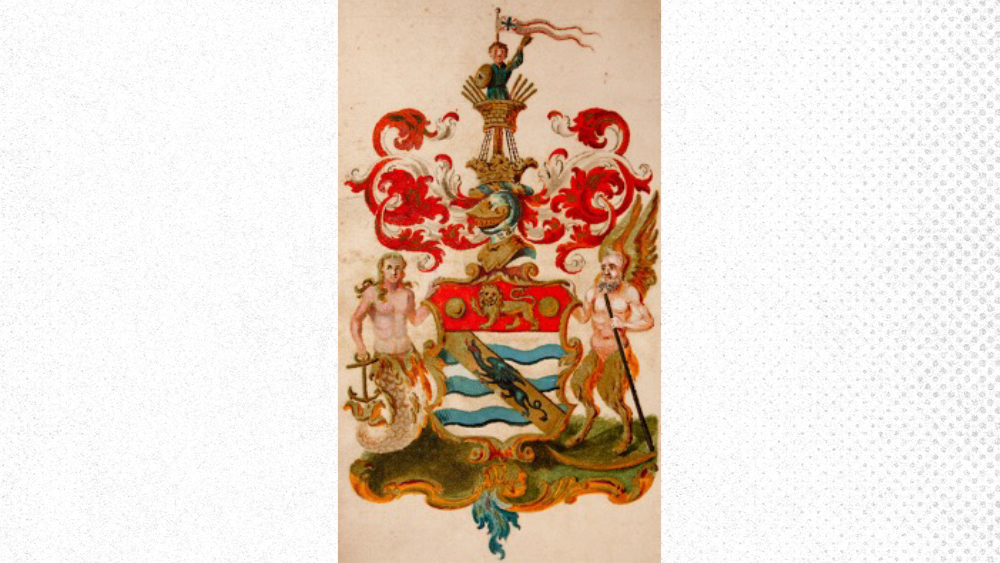
The crest of the Society of Merchant Venturers
The Society of Merchant Venturers
“This organisation of elite men, founded in 1552 (which still exists to this day), profited greatly from all elements of Transatlantic slavery. They *lobbied against the monopoly of the London-based Royal African Society and for ‘letting in the merchants of this City to a share in the African trade.’”
- Historian Caine Tayo Lewin-Turner writing for Bristol Museum
*To lobby = To try and influence a decision, usually a legal decision.
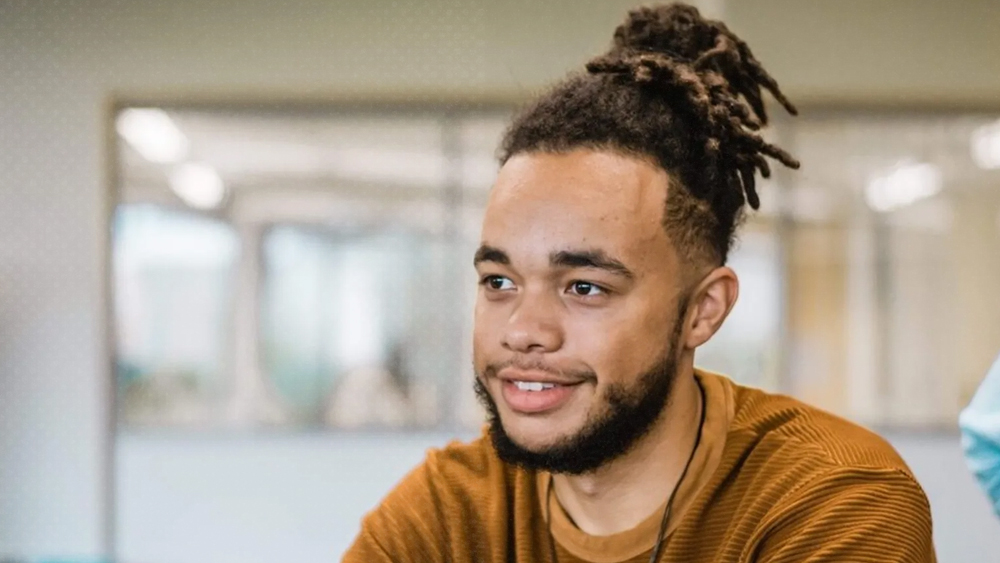
Historian Caine Tayo Lewin-Turner
Edward Colston and Bristol
“Edward Colston was born into an established Bristol merchant family that appears to have settled in the city around 1340. The good standing of the family was reflected in its having a coat of arms, with a pair of dolphins as their crest. William Colston (1608-1681), Edward's father, had served an apprenticeship with Robert Aldworth, the wealthiest Bristol merchant of the early Stuart period, and had prospered as a merchant. In 1634 he became a member of the Society of Merchant Venturers, the leading mercantile organisation in Bristol”.
- From a pamphlet published in 1999 by The Bristol Branch of the Historical Association, written by Historian Kenneth Morgan.
Edward Colston (1636 - 1721) became a member of the Society of Merchant Venturers in 1683, just like his father had been before him. Born into a wealthy *merchant family, Colston gained more wealth by transporting enslaved people from West Africa to the *colonies in the Caribbean. Colston donated some of his money to causes that were connected with his church and the Conservative Party. Because of this there are six Bristol Schools and educational institutions, eight public works of art, six streets, and nine buildings, institutions and businesses which are named after Edward Colston.
*Merchant = someone who trades (buys/sells) items.
*Colonies = countries owned by another country.
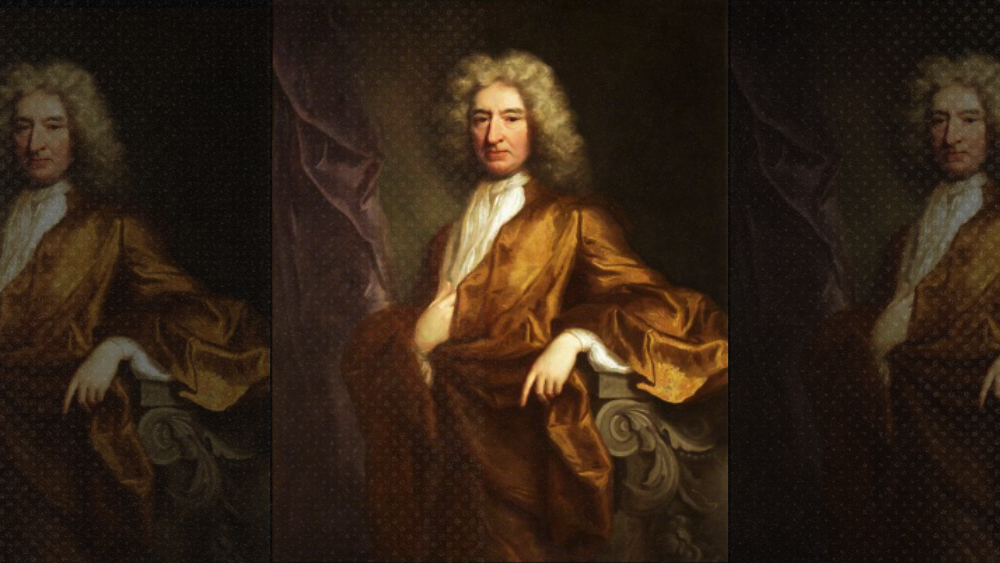
A painting of Edward Colston
by Jonathan Richardson
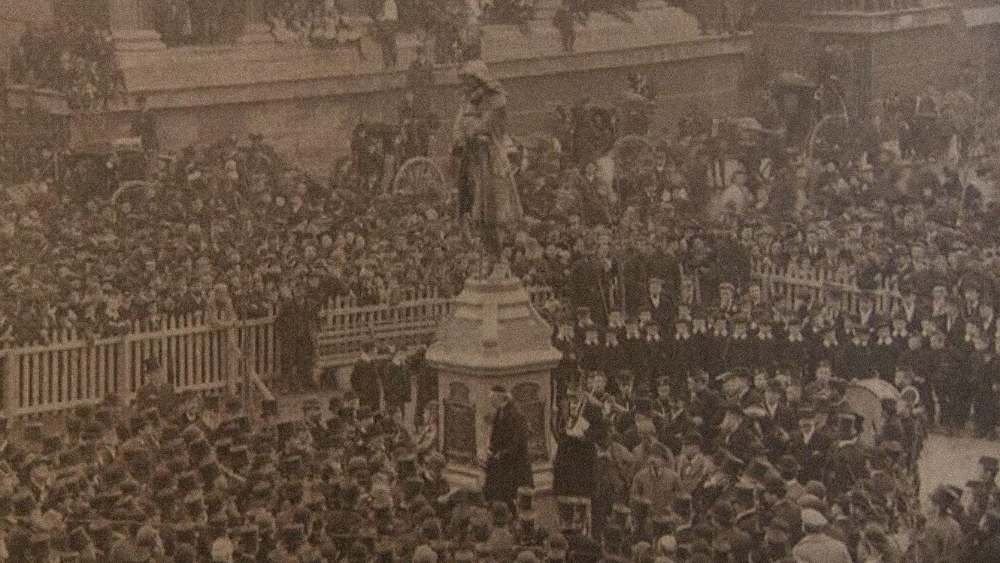
The statue of Edward Colston is unveiled in the centre of Bristol in 1895
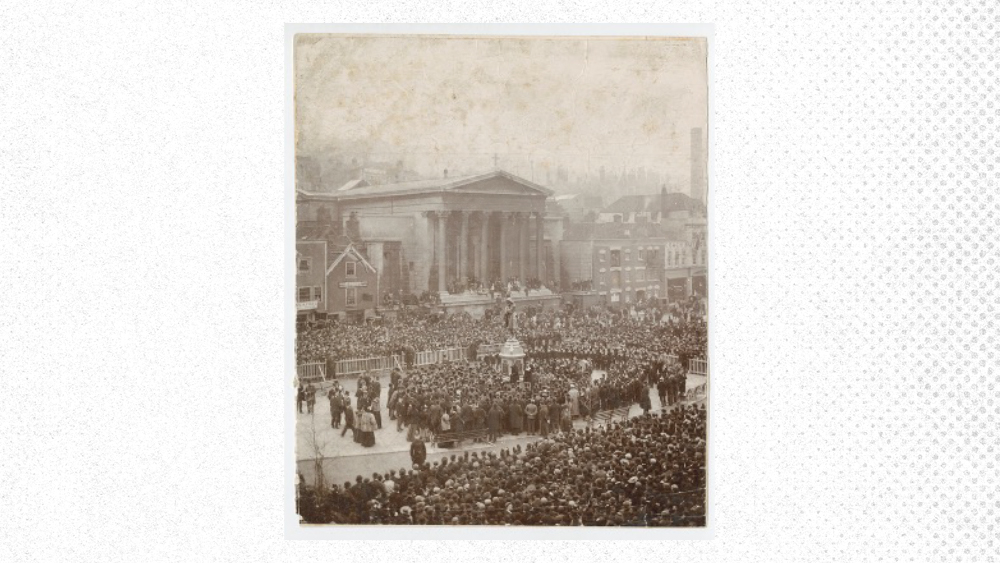
The statue of Edward Colston is unveiled in the centre of Bristol in 1895
100 years of campaigns against Edward Colston
1920 - Rev Wilkins publishes a history of Edward Colston, which highlighted his deep involvement in the enslavement and exploitation of African people and the fact that he denied donations to anyone who wasn’t from his Church or a Conservative Party supporter.
1979 - David Foot publishes a book called Famous Bristolians, and explains how historians and the Church of England had hidden Colston’s involvement in the enslavement and exploitation of African people.
1996 - Massive Attack are Bristol’s most successful band and have gained worldwide recognition. In 1996 they chose to use their status to raise global awareness about the legacy of slavery in Bristol by refusing to play at Colston Hall until it was renamed. Colston Hall is Bristol’s largest music venue and it is owned by Bristol City Council.
1998 - After graffiti appears on the statue of Edward Colston, The Times reports that “Leaders of the black community in Bristol yesterday condemned Colston...as one of the worst offenders in the history of slavery, and said the statue should be taken down”. The statue continues to be graffiti’d for the next twenty years.
1998 - A Bristol Councillor Ray Sefia called for the Colston statue to be removed.
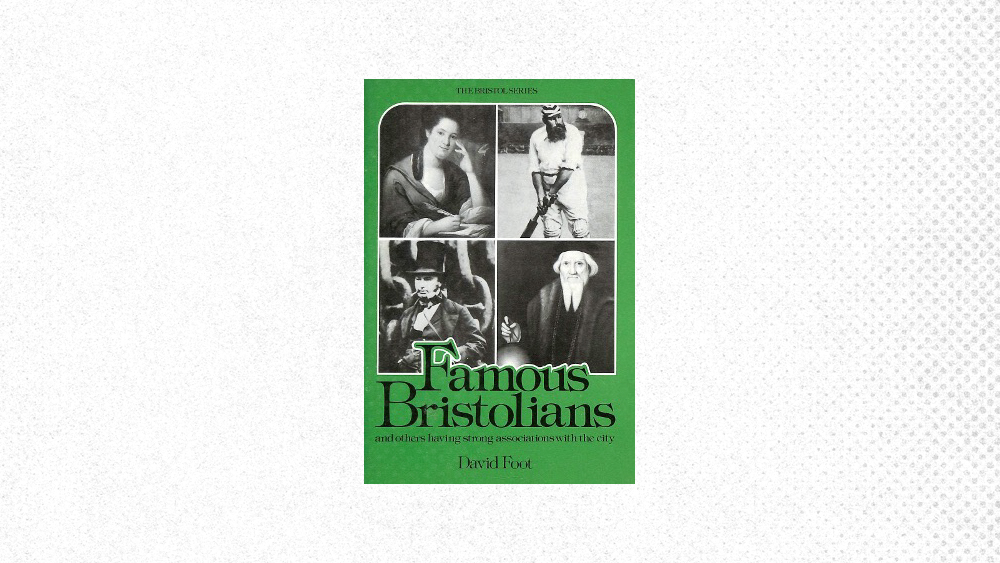
The 1979 publication of Famous Bristolians by David Foot 99.
100 years of campaigns against Edward Colston
1999 - Bristol Museum hosted an exhibition called “A Respectable Trade? Bristol and Transatlantic Slavery”. It acknowledged that Edward Colson Traded in enslaved people and that the full story had not been told.
2007 - British Civil Rights leader and Bristol Bus Boycott campaigner Paul Stephenson renewed calls for the renaming of Colston Hall.
2009 - Police stop a protest by “Art and Activism” around the Colston statue
2011 - The Bristol Music Trust which now runs the Colston Hall, still owned by Bristol City Council, announces that it will not change its name.
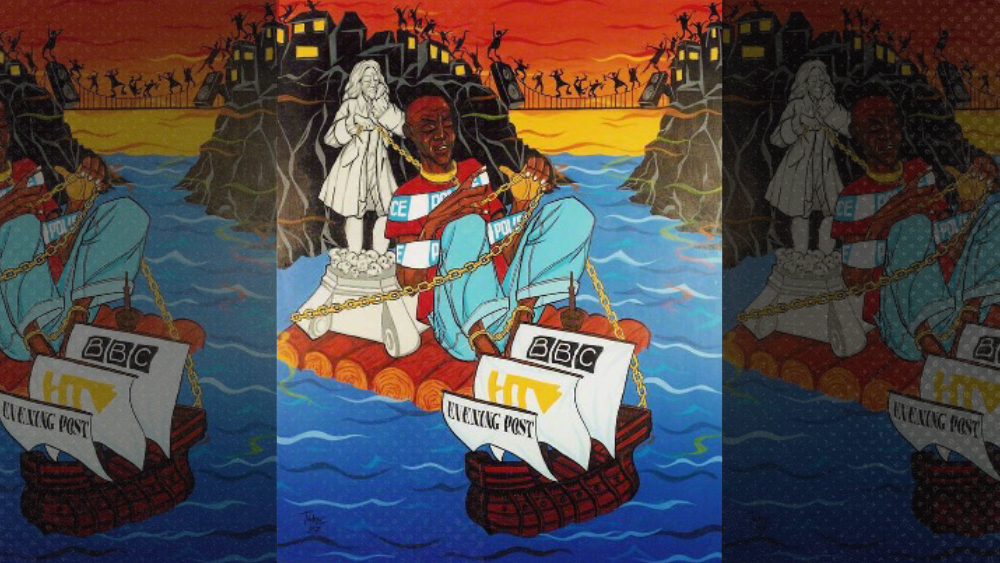
“Sold Down The River”, a painting by Bristolian artist Tony Forbes, which was included in the “A Respectable Trade?” exhibition in 1999.
100 years of campaigns against Edward Colston
2012 - George Ferguson, a member of the Society of Merchant Venturers (SMVs) campaigns to be Bristol’s first City Mayor, as an independent candidate.
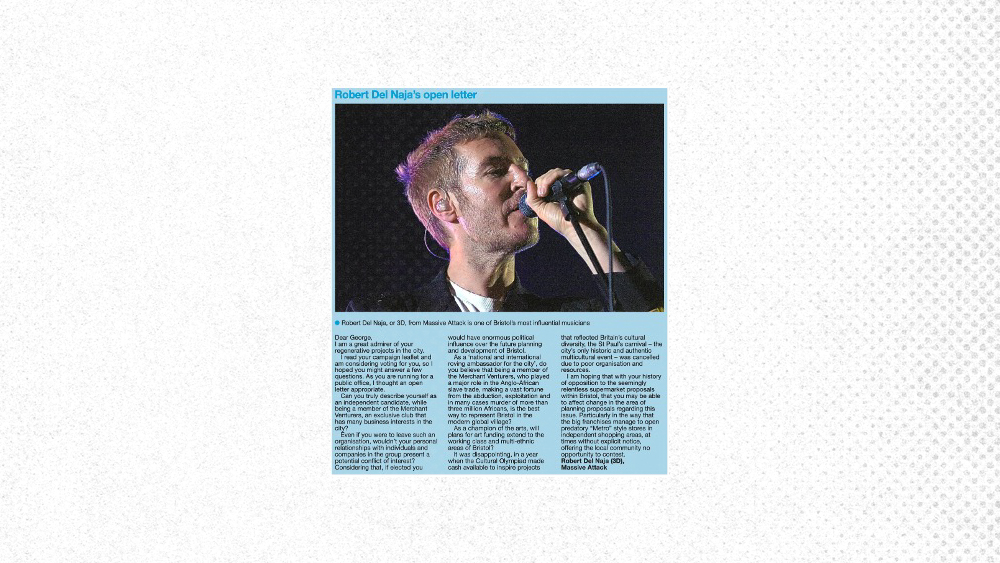
2012 - Bristol band Massive Attack write an open letter to George Ferguson printed in the Evening Post, questioning how he could be considered independent while being a member of the SMVs.
2012 - To win a public endorsement from Massive Attack, George Ferguson promises he will step down from the SMVs and change the name of the Colston Hall if elected. George Ferguson stepped down as an official member of the SMVs and Massive Attack provide the endorsement. George Ferguson wins the election but never changes the name of Colston Hall as promised.
2013 - Recently-elected Mayor George Ferguson, who left the Society of Merchant Venturers to stand for Mayor, said the annual celebrations of Edward Colston are ‘perverse’ and ‘not a celebration I shall join’.
100 years of campaigns against Edward Colston
2015 - The Countering Colston campaign group is established, one group of community members who argue that it is not appropriate to memorialise a Trader of enslaved people, and has demanded change. The group asked Bristol City Council to remove the statue of Edward Colston from the city centre.
2016 - Marvin Rees was elected City Mayor for Bristol.
2016 - A peaceful Black Lives Matter protest in Bristol draws attention to the legacy of Edward Colston.
2017 - The Bristol Music Trust now announces that Colston Hall will change its name.
2018 - Bristol City Council announces it is working on a “corrective” plaque for the Colston Statue.
2018 - Protest artwork appears by the artist @gettinguptostuff around the statue highlighting Colston’s role in the Transatlantic Slave Trade.
2019 - Mayor Marvin Rees steps in to stop a new plaque being added to the Colston statue, due to disputes about what it would say.
No City
“No city is more wilfully blind to its history. It should stop honouring the slave trader who gives the venue his name”
Historian David Olusoga writing about Bristol in 2017
“No city is more wilfully blind to its history. It should stop honouring the slave trader who gives the venue his name”
Historian David Olusoga writing about Bristol in 2017
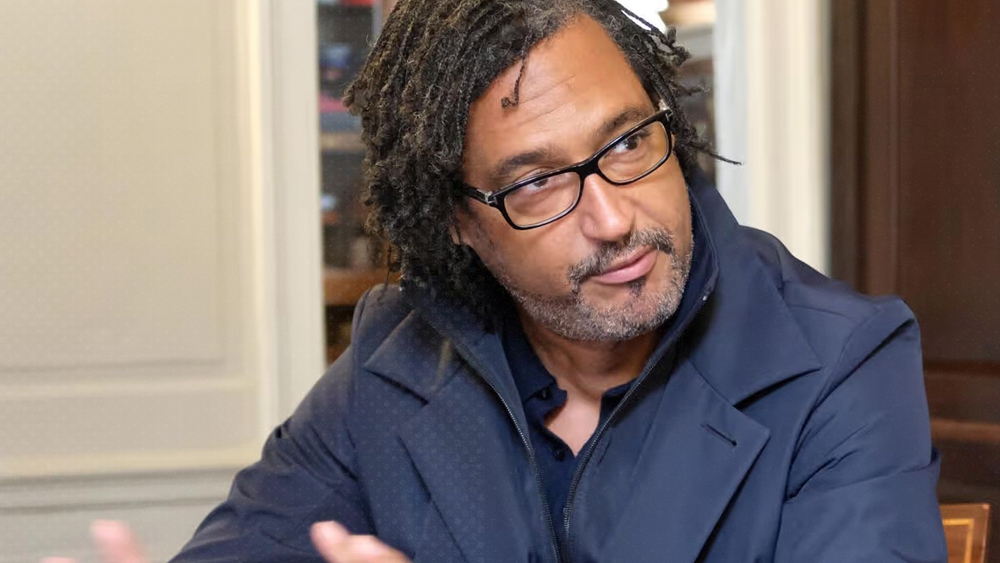
Historian David Olusoga
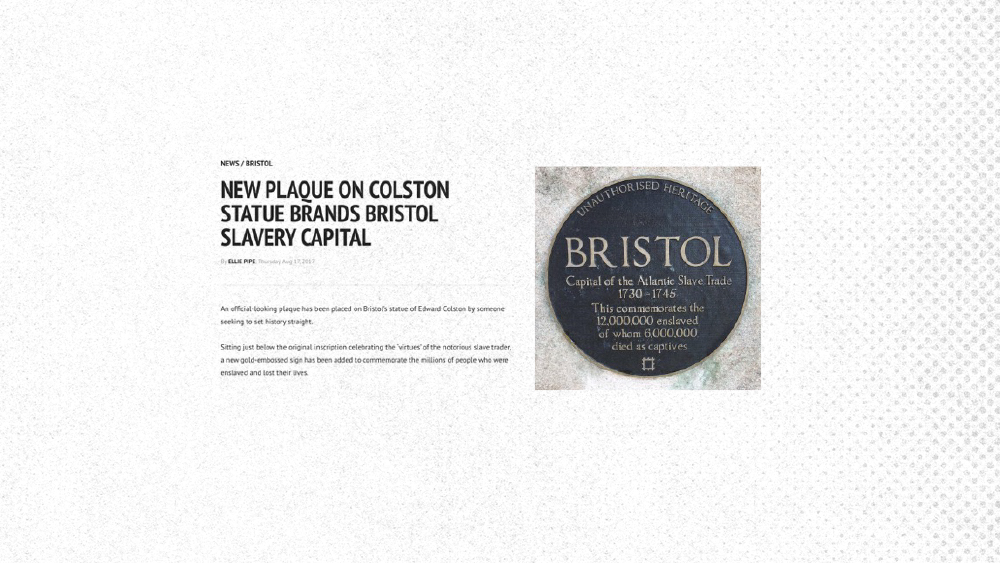
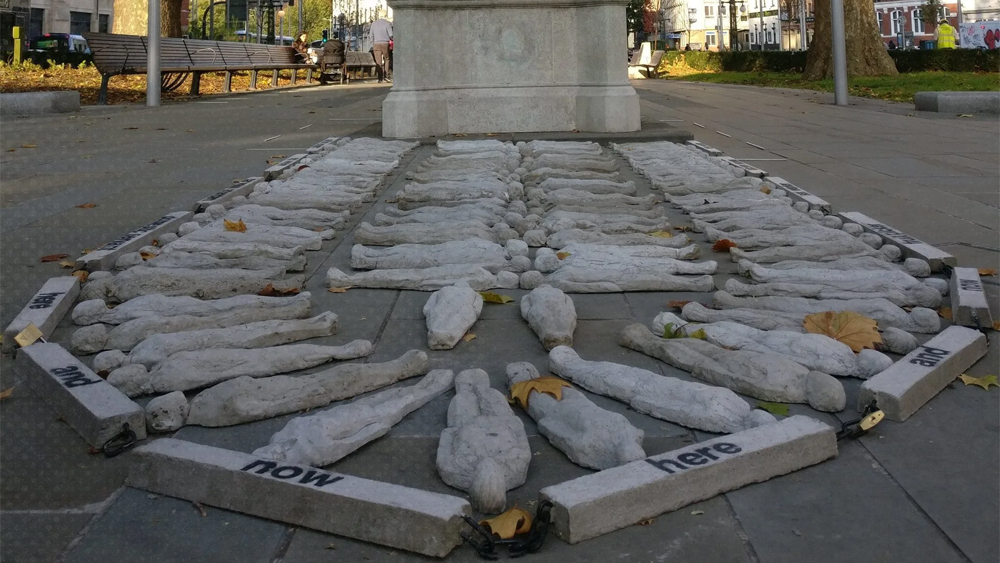
Artwork by @gettinguptostuff appears around the plaque in 2018
Action of non-action
Despite the proposal for a new corrective plaque and uproar within Bristol that Colston should not be celebrated, Mayor Marvin Rees stepped in to stop a new plaque being added to the Colston statue, due to disputes about what it would say.
In an interview for BBC News on 25 March 2019, Marvin Rees said it was "extremely naive" of the Merchant Venturers to believe it should have the final say on the words for a new plaque "without reference to the communities of descendents of those Africans who were enslaved and treated as commodities by merchants like Colston". He said it was "an oversight... not to have even had a conversation with him as 'Europe's first Mayor of African heritage' and the Mayor of a city whose wealth has been inseparable from slavery and plantations and who is himself the descendant of enslaved Africans".
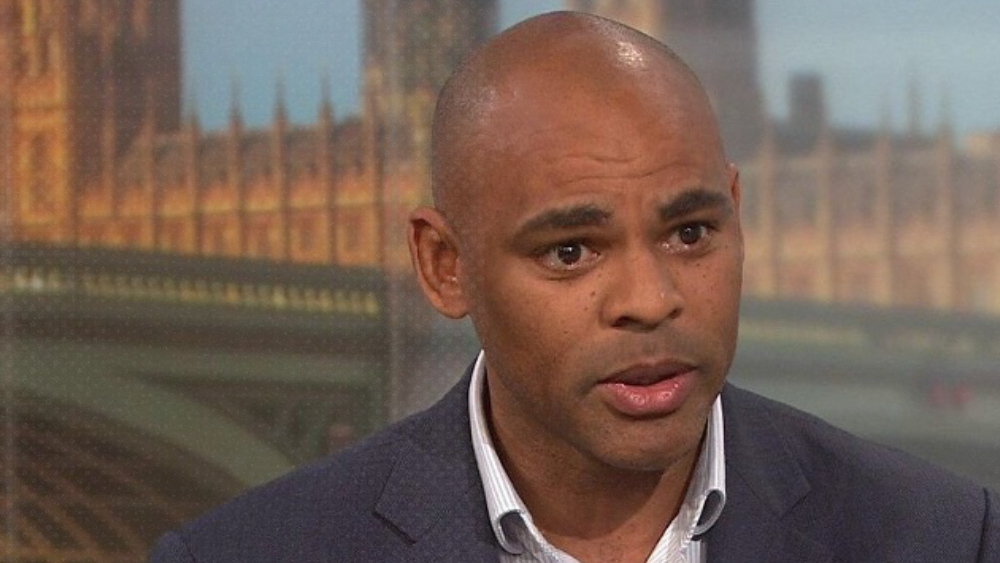
Marvin Rees is interviewed on BBC News 25 March 2019
100 years of campaigns against Edward Colston
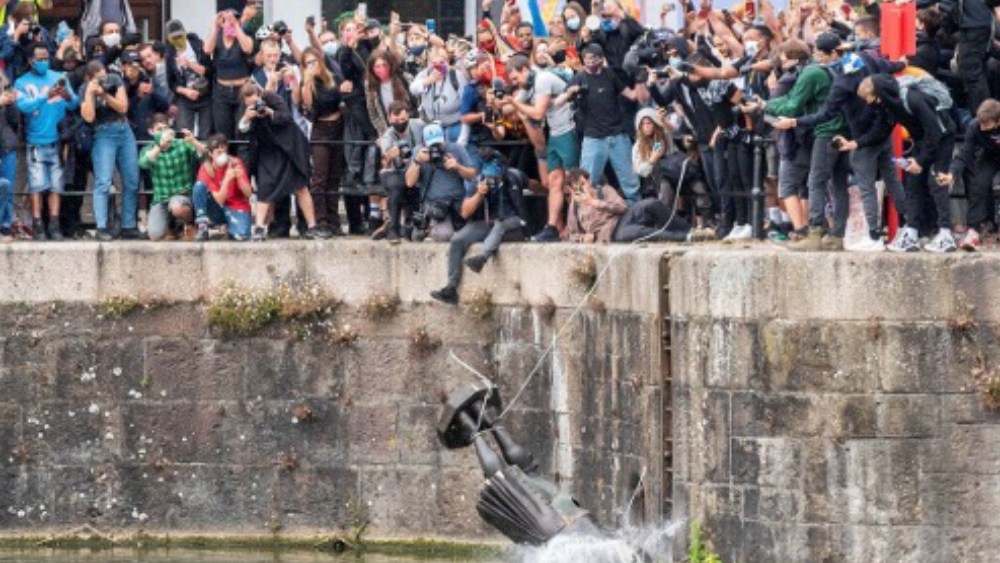
7 June 2020 - During a peaceful Black Lives Matter protest the statue of Edward Colston was toppled from its plinth by members of the public and thrown into the docks.
7 June 2020 - During a peaceful Black Lives Matter protest the statue of Edward Colston was toppled from its plinth by members of the public and thrown into the docks.
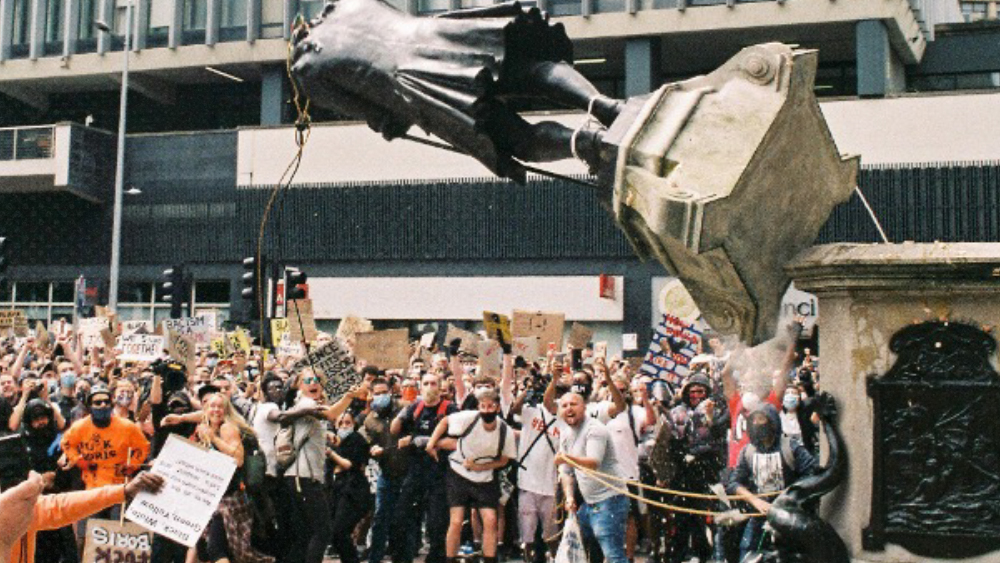
Statement from the Society of Merchant Venturers
Following the Black Lives Matter protest in Bristol on 7th June, the energy for change across our city continues to grow.
The statue of Edward Colston was removed from Bristol’s city centre last weekend and the fact that it has gone is right for Bristol.
To build a city where racism and inequality no longer exist, we must start by acknowledging Bristol’s dark past and removing statues, portraits and names that memorialise a man who benefited from trading in human lives.
It was inappropriate for the Society of Merchant Venturers to get involved in the rewording of the Colston statue plaque in 2018 and we have listened to the constructive comments put to us over this past week.
As we look forward, we are examining our own role within the city, how we collaborate with others and accelerate our part in ensuring that Bristol overcomes inequality and disadvantage wherever it exists.
As the co-sponsor of Colston’s Girls’ School, we are fully supportive of their plans to conduct a transparent consultation to consider renaming the school. We welcome a new name that accurately reflects the school’s vision and values. We also support Colston’s School as they too enter a process of discussion about the school’s name.
It is inexcusable that racism and inequality still exist today. We share a determination for Bristol to become an inclusive, sustainable and successful city where the place of your birth or the colour of your skin is not an obstacle.
12th June 2020
“The reason protestors had to take action into their own hands is the city’s politicians seem to be afraid of their own shadows. I’ve contacted all of Bristol’s MPs about a meaningful memorial or ‘slavery’ museum and I barely got a response. The silence from the majority has been deafening.”
- Countering Colston campaigner Mark Steed

Colston Hall signage is removed 15 June 2020
24 hours later
15 July 2020 - A new statue ‘A Surge of Power’ appears on Colston’s plinth of BLM protester Jen Reid, made by the artist Marc Quinn.
Jen Reid said: "Seeing the statue of Edward Colston being thrown into the river felt like a truly historical moment; huge. When I was stood there on the plinth, and raised my arm in a Black Power salute, it was totally spontaneous, I didn't even think about it. My immediate thoughts were for the enslaved people who died at the hands of Colston and to give them power. I wanted to give George Floyd power, I wanted to give power to Black people like me who have suffered injustices and inequality."
16 July 2020 - Bristol City Council removes the statue of Jen Reid the following day.
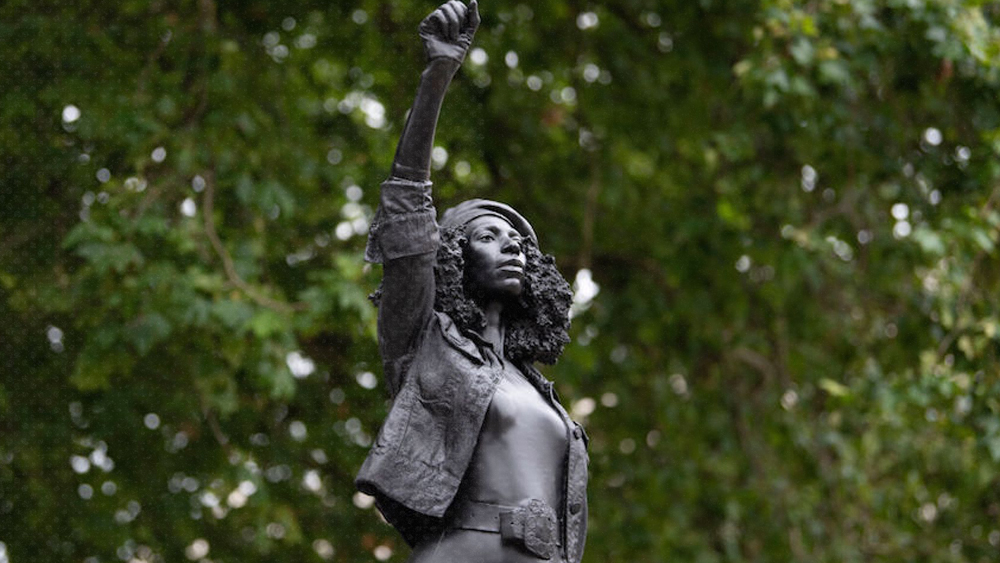
Marc Quinn’s statue A Surge of Power of BLM protester Jen Reid, who had stood on top of the plinth during the June 7 protest.
Changes in Bristol since the statue was toppled in 2020
Colston Hall renamed Bristol Beacon.
Colstons Girls School renamed Montpelier High.
Colston Tower renamed Beacon Tower.
In June 2021 a new exhibition called “The Colston Statue: What next?” opens at Bristol’s M Shed museum, displaying the statue of Edward Colston. It is overseen by Bristol City Council’s “We Are Bristol” History Commission.
The Colston Arms and The Colston Yard pubs change their names.
Colston School announces that it will change its name.
In December 2021 Bristol councillors voted to hold a referendum that would decide whether the role of the City Mayor of Bristol should exist or not.
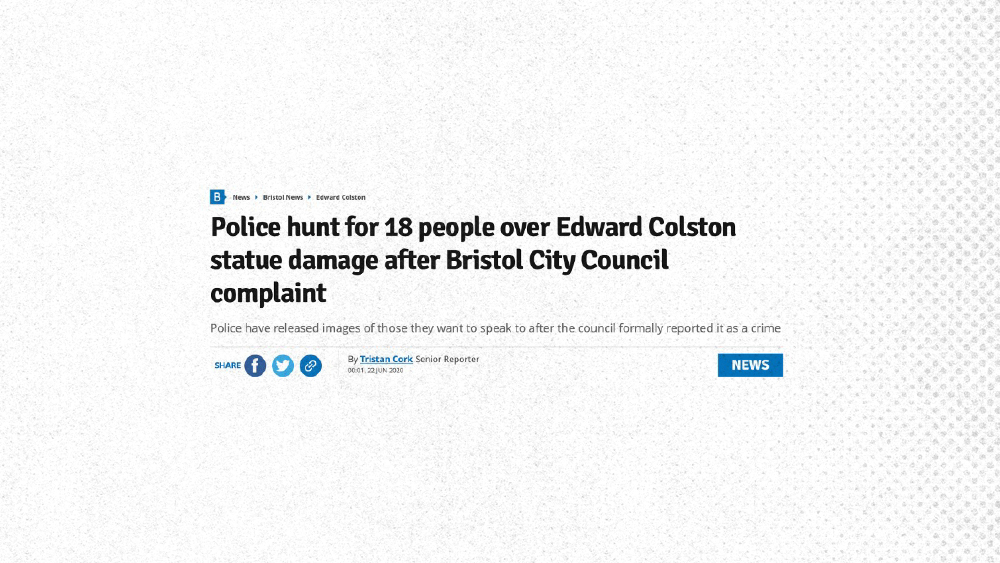
10 charged after Bristol City Council complaint
1 Oct 2020 - Six men accept conditional cautions for their involvement in the toppling of the statue of Edward Colston. They are also told to each pay a £100 fine.
9 Dec 2020 - Four people are charged with criminal damage for their involvement in the toppling of the Edward Colston statue. They became known as The Colston Four.
25 Jan 2021 - The Colston Four appear at Bristol Magistrates Court. They opt to be tried in front of a Judge and Jury in a Crown Court.
2 March 2021 - The Colston Four make their first appearance at Bristol Crown Court and a date for their trial is set for the 13 December 2021.
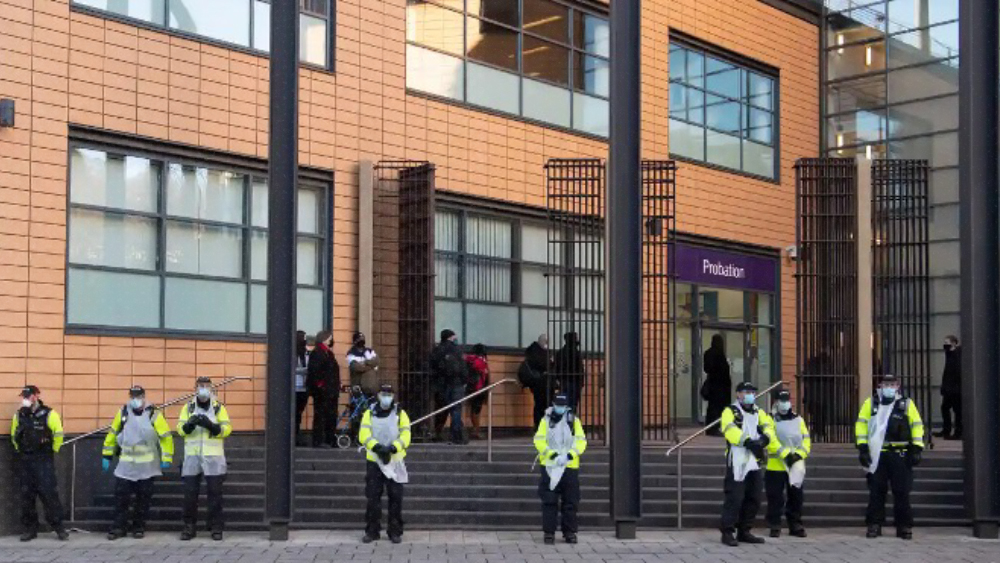
Police outside Bristol Magistrates Court where four people appeared on 25 January 2021, charged with criminal damage.
“The idea that the toppling of Colston’s statue last year or the changing of the name of the Colston Hall in 2017 were the product of ‘woke’ faddism denies the actions of many Bristolians who, over many decades, have sought to tell the truth about Edward Colston and challenge his ‘cult’. These people range from those who crept through the darkness to mark his statue with the words “slave trader” to those who burrowed through the archives to get the facts straight. We salute them all.”
- The Bristol Radical History Group
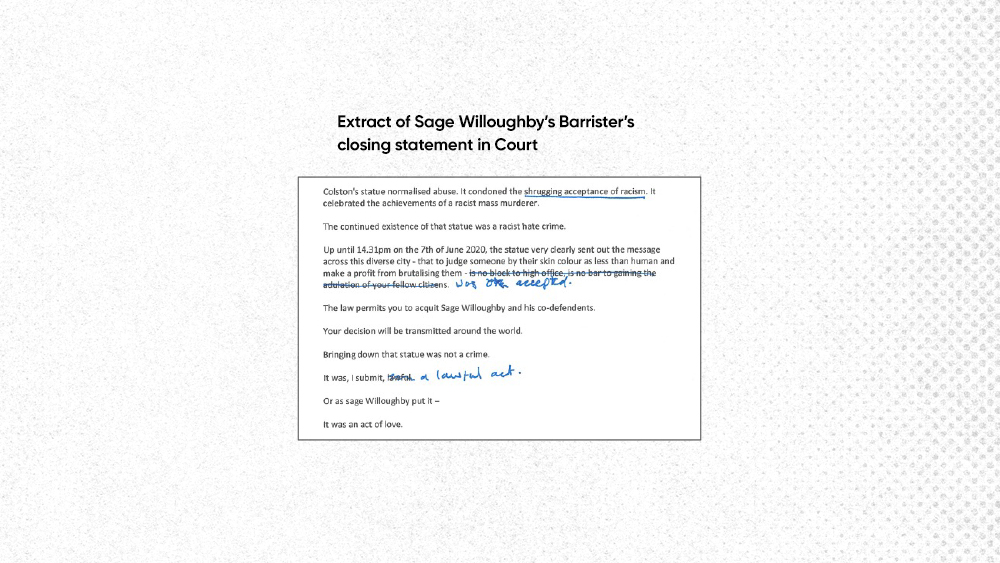
Verdict: Not Guilty
‘In closing statements following the nine-day trial, the defence had urged the jurors to “be on the right side of history”, saying the statue, which stood over the city for 125 years, was so indecent and potentially abusive that it constituted a crime.’ - The Guardian, 2022
After the trial, Rhian Graham, Milo Ponsford, Jake Skuse, Sage Willoughby (known as the Colston Four) were *acquitted of the charge of criminal damage that was brought against them.
*Acquitted = to free (someone) from a criminal charge by a verdict of not guilty.
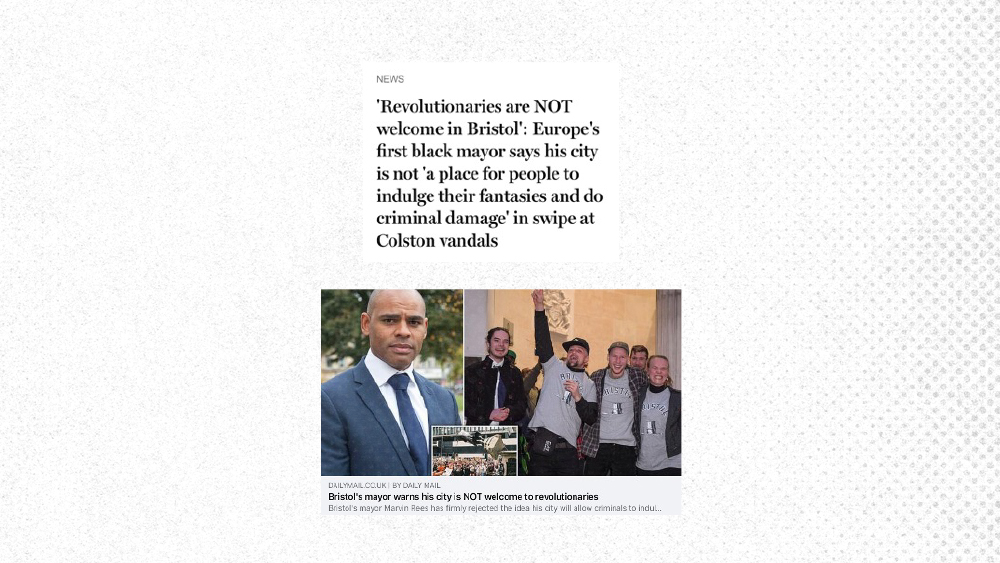
Who does the statue belong to?
When the statue was first planned, Colston-related charitable bodies raised £407 towards the cost of the statue. Further funds, to a total of £650, were raised through public appeals after the unveiling, including a contribution from the Society of Merchant Venturers.
Before the statue was toppled, the Society of Merchant Venturers expressed opinions about what the plaque on the statue should say.
After the statue was toppled, no one came forward to claim it as their property. Marvin Rees said it had not yet been established for sure who the monument belonged to.
Speaking during a press briefing on Wednesday June 10, the Mayor did not reveal names but said the council had been in talks with organisations “most associated with Colston and the Bristol establishment” about its ownership.
Reports were that these organisations included the Society of Merchant Venturers, of which Colston was a member and until 2016 kept his fingernails and hair on display at their Clifton Headquarters. It was proven during the Crown Court case in 2021, that the statue had been bestowed to “the people of Bristol” and Bristol City Council were its *custodians.
*Custodian = A person who has responsibility for taking care of or protecting something.
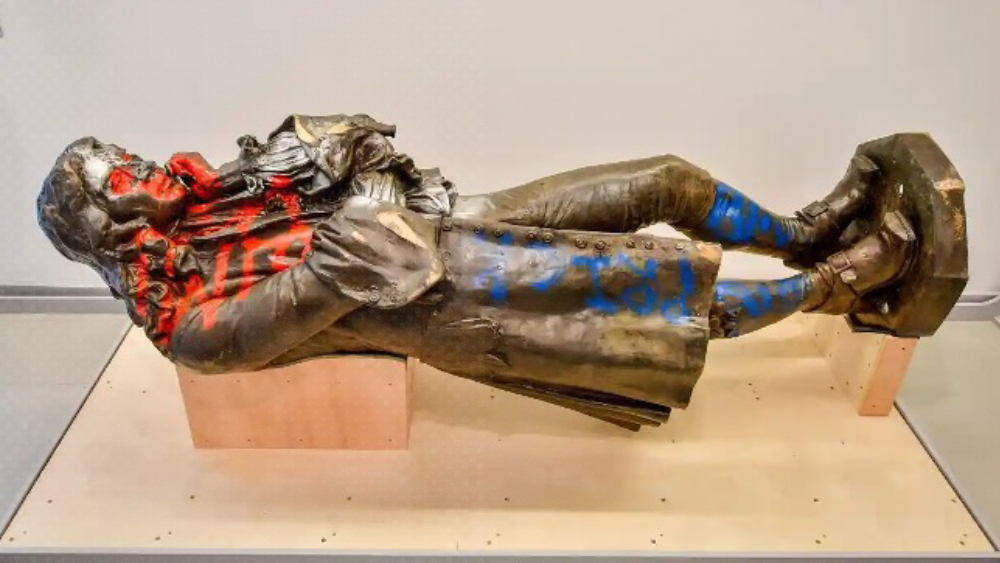
The statue of Edward Colston as part of the We Are Bristol History Commision exhibition in the MShed Museum (4 June 2021 - 3 Jan 2022)
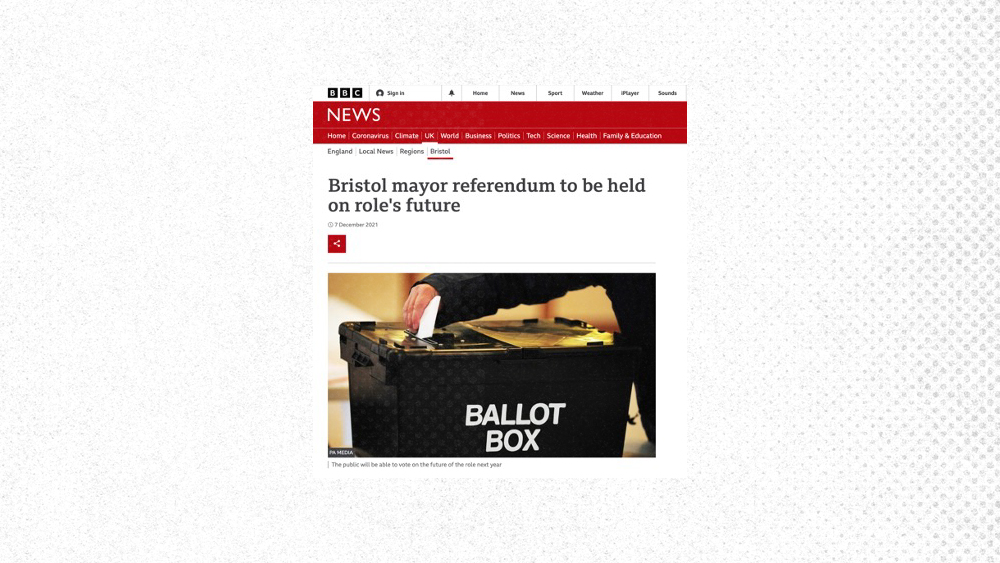
On May 5th 2022 Bristol residents voted to abolish the role of City Mayor of Bristol in favour of a committee system.
Consider these points
There had been controversy over the memorialisation of Edward Colston for over 100 years, and Bristol’s people toppling the statue challenged the status quo because usually these are political decisions.
Why was the Colston statue not removed previously, and why was the statue “A Surge of Power” removed in under 24 hours?
The influence of the Society of Merchant Venturers in Bristol – a charitable organisation that dates back to the 13th century, when they helped fund John Cabot’s journeys to the New World.
During the 18th Century a quarter of their members were directly involved in the exploitation and enslavement of African people, including Edward Colston.
Nowadays, they still fund schools and universities in the city. They are controversial because although they donate lots of money, much of this money came from the exploitation of others.
Add a comment.
Please let us know your thoughts.
Choose your Avatar
I AM NOT A ROBOT
SUBMIT

"I would have loved to have seen things differently when I was younger."
Tom Simplson

"We’re slowly trying to find it ourselves, Because it was lacked in the curriculum"
A Student

"It's incredible that his history still hasn't been given a fair representation,"
Lawrence Hoo
"It has become a tsunami of enlightenment and information"
A Student
Please let us know your thoughts.
Choose your Avatar
I AM NOT A ROBOT
SUBMIT
"I would have loved to have seen things differently when I was younger."
Tom Simplson
"We’re slowly trying to find it ourselves, Because it was lacked in the curriculum"
A Student
"It's incredible that his history still hasn't been given a fair representation,"
Lawrence Hoo
"It has become a tsunami of enlightenment and information"
A Student