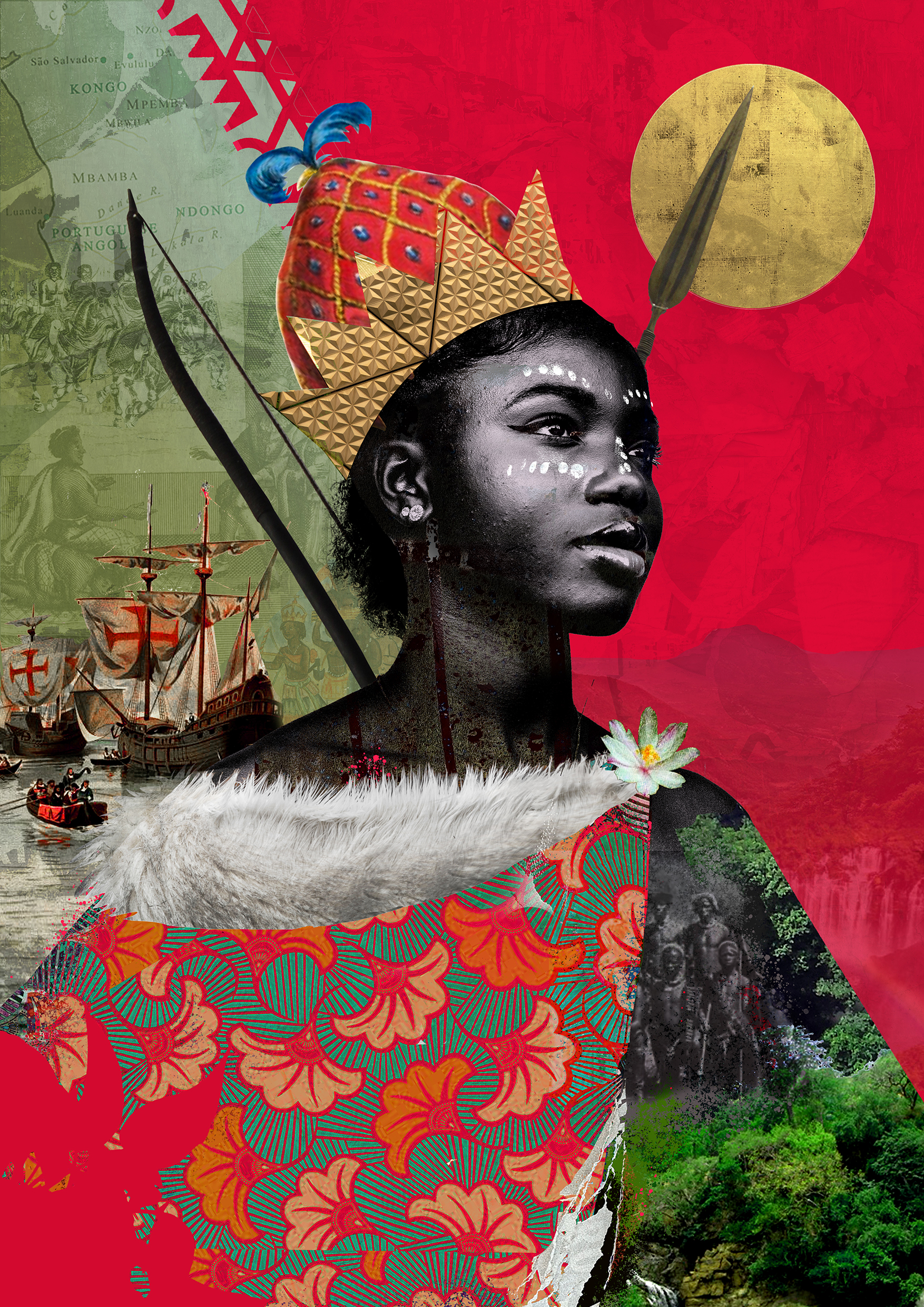
Source 1
Nzinga realized that, to remain viable, Ndongo had to reposition itself as an intermediary rather than a supply zone in the slave trade. To achieve this, she allied Ndongo with Portugal, simultaneously acquiring a partner in its fight against its African enemies and ending Portuguese slave raiding in the kingdom. Ana Nzinga’s baptism, with the Portuguese colonial governor serving as godfather, sealed this relationship. By 1626, however, Portugal had betrayed Ndongo, and Nzinga was forced to flee with her people further west, where they founded a new state at Matamba, well beyond the reach of the Portuguese.”

Bortolot, Alexander Ives. “Women Leaders in African History: Ana Nzinga, Queen of Ndongo.” In Heilbrunn Timeline of Art History. New York: The Metropolitan Museum of Art, 2000 “Nzinga focused on developing Matamba as a trading power by capitalizing on its position as the gateway to the Central African interior. By the time of her death in 1663, Matamba was a formidable commercial state that dealt with the Portuguese colony on an equal footing”
Bortolot, Alexander Ives. “Women Leaders in African History: Ana Nzinga, Queen of Ndongo.” In Heilbrunn Timeline of Art History. New York: The Metropolitan Museum of Art, 2000
Source 2
“In the months following Njinga’s 1644 rout of the Portuguese forces near Ambaca, the Portuguese situation had deteriorated; the army was laid low by sickness and lack of military supplies, while Njinga's forces operated seemingly everywhere with apparent impunity. Her troops roamed about , intimidating .... And raiding Ngola Hari’s lands. ..... In July 1644 officials....advised the King of the need to “exterminate her” referring to her as that “infernal woman in her customs who links herself with all the rebels” .....acknowledging that the regular slave trade she carried on with the Dutch guaranteed her supplies of ammunition to sustain her eighty thousand – man army- while damaging Portuguese trade and power”
Linda Heywood “Queen Njinga The Warrior Queen”, published 2017
QUEEN NZINGA MBANDE'S LEGACY
Source 3
“Njinga played a decisive role in the history of her country and was the catalyst of a genuinely socio-political and cultural revolution. As such, she has been a source of inspiration for African women for hundreds of years.
She is known throughout Africa for her intelligence, her political and diplomatic wisdom, and her flair as a military tactician – and as an exceptional woman and a key historical figure”
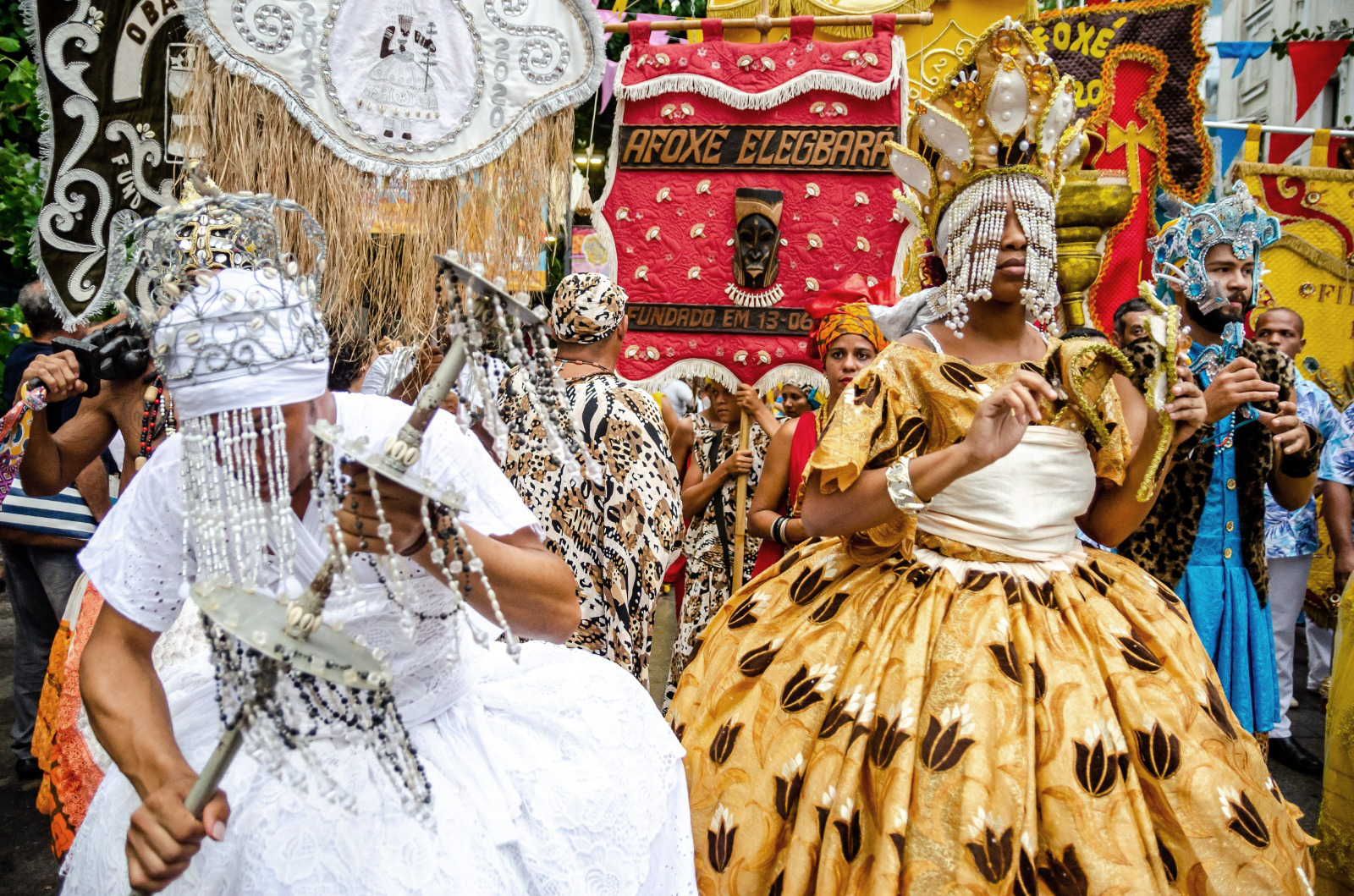
Queen Nzinga Mbande is recognised by religions of African origin. In Haiti, in a variant of voodoo, she is represented as a character from the Bantu, Ewe and Fon cultures. In Brazil, she is portrayed in Candomblé (an Afro-Brazilian religion) as the character ‘Matamba’ – the Lady of Thunder, a warrior chieftain and a friend of the heroes. Women seeking the strength to solve their problems invoke her in rituals.
Nzinga also features in the Brazilian tradition of Congada, a religious rite that blends African traditions and European culture, performed in homage to saints of African heritage. In this rite, the coronation of the King of Kongo and Queen Nzinga symbolize the arrival of Christianity in Angola and Brazil.
- UNESCO